


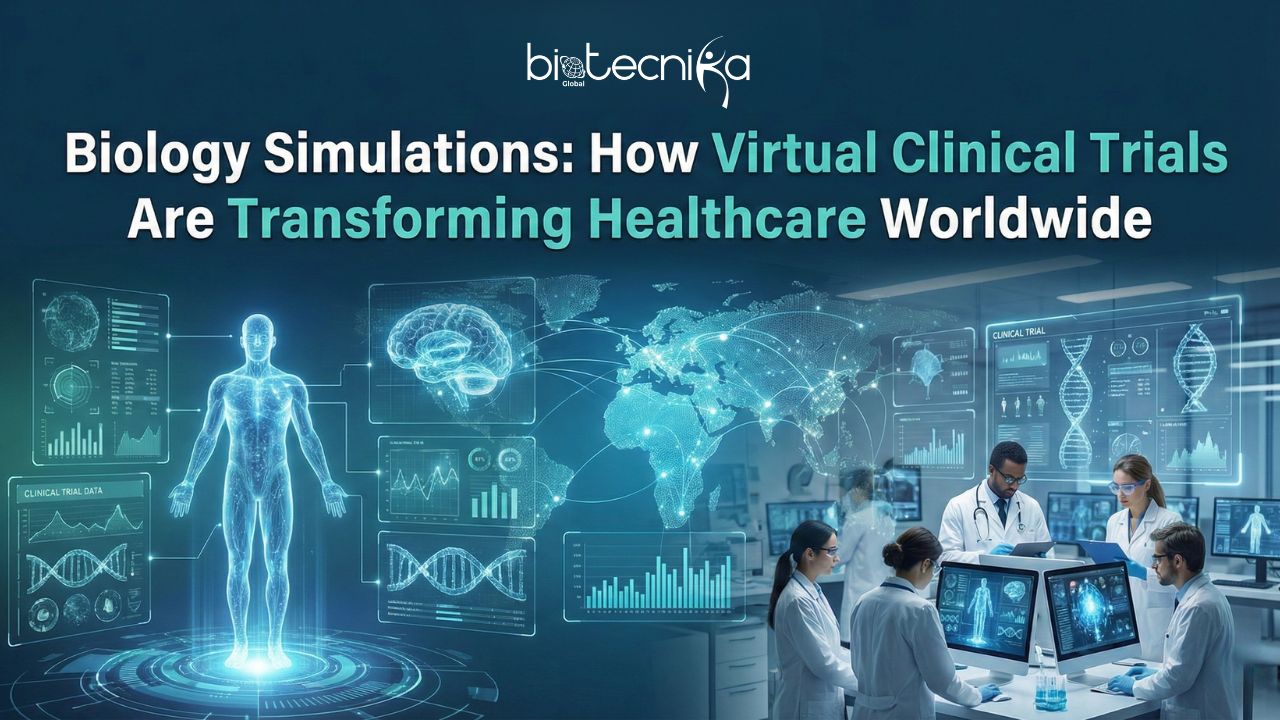
Virtual Biology Simulations: Revolutionising Clinical Trials
Biology Simulations Are Becoming More Commonplace in the Field of Medicine
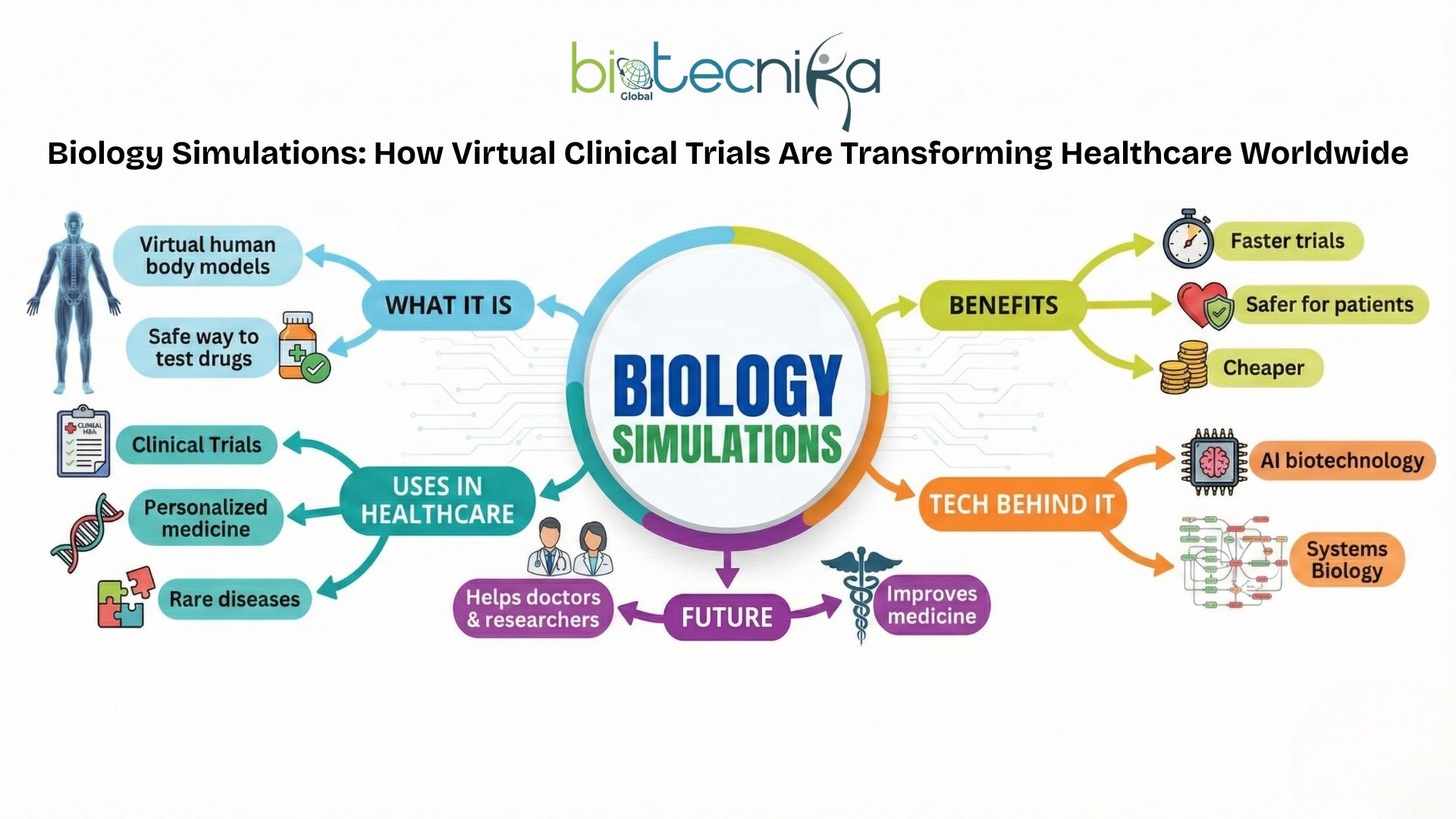
Through the use of Biology Simulations, the way that researchers have developed drugs for testing has changed. In place of using actual humans to try out new medicines. Biology Simulations now allow researchers to create digital representations of human organs, tissues, and disease states. This means that instead of performing a drug test on a person without prior knowledge of the drug’s safety. The researcher now has an opportunity to model the predicted results of the drug before it goes to stage I clinical trial with the help of Systems Biology and AI in Biotechnology. This new process is revolutionizing and helping to create an enormous improvement in the methods currently used in Clinical Trials. As a result, researchers are able to conduct Clinical Trials more quickly, with a greater degree of safety.
Using Biology Simulation To Conduct Clinical Trials
The traditional methodologies associated with Clinical Trials require multiple years for completion, in addition to costing millions of dollars. Volunteers are at risk of being harmed while participating in a clinical trial. Because they are subjected to any unwanted or unexpected side effects created as a result of the drug being tested. Biology Simulations provide an environment where researchers can conduct experiments safely in a simulated environment. Researchers are now able to replicate thousands of different clinical situations in a short amount of time by utilizing state-of-the-art artificial intelligence and biotechnology systems to analyze vast amounts of complex biological data.
By combining Systems Biology and Biology Simulations, it becomes possible for researchers to view. Also, analyze how drugs impact the entire human body system rather than concentrating on just one isolated system. Through this more complete method of evaluating drugs. Researchers may expect improved accuracy from Clinical Trials as well as reduced incidences of problems arising with actual human test subjects after they complete the Clinical Trials.
Personalized Medicine with Virtual Trials
Every individual responds differently to treatment. Biology Simulations allow researchers to create personalized virtual models based on a patient’s genetic and health data. This can predict how someone might respond to a specific drug. Traditional Clinical Trials often rely on general population testing, but virtual trials enable safer, more precise treatments. AI biotechnology is key to analyzing massive patient datasets and producing accurate personalized predictions.
Traditional vs Virtual Clinical Trials
| Feature | Traditional Clinical Trials | Virtual Clinical Trials (Biology Simulations) |
| Duration | Years | Months |
| Cost | High | Lower |
| Safety | Risk of side effects | Minimal risk |
| Patient Recruitment | Can be challenging | Not needed for early testing |
| Personalization | Limited | High (based on genetic data) |
| Data Analysis | Manual, slower | Automated via AI biotechnology |
Cost and Time Efficiency
Clinical Trials are costly and time-consuming to implement in the “real” world. Instead, using Biology Simulations allows for virtual testing in the early stages of drug development, with high cost and time savings. Researchers have the ability to expend resources only on the most promising treatments. The use of AI in biotechnology allows researchers to quickly analyze data and complete Biology Simulations, enabling faster and more reliable decision-making by researchers about the most promising treatments.
Rare Diseases and Systems Biology
In addition, Biology Simulations have the most application potential for studying rare diseases. Recruitment to conduct traditional Clinical Trials is difficult due to the lack of patients with rare diseases. Therefore, using virtual models to simulate the rare condition in detail gives scientists a tool to test new therapies. As an additional benefit, integrating Systems Biology with Biology Simulations provides researchers with a more thorough understanding of the complex interactions of biological systems, leading to the design of new therapies for these diseases.
Limitations and the Future
While Biology Simulations are transforming Clinical Trials, they do not replace real-world testing entirely. Human trials are still necessary to confirm safety and effectiveness. However, virtual models significantly reduce risks and enhance trial design. The combination of Biology Simulations, AI biotechnology, and Systems Biology is setting new standards in medical research.
Educational & Training
Research and education are among the several uses of these simulations. They allow students, researchers and professionals within hospitals and pharmaceutical organizations to observe how biological processes behave like they do in the real world through experimentation within their own controlled environment. As a result, the evolution of healthcare research and education continues to become more effective.
Conclusion: Safer, faster, smarter future
In conclusion, Biology Simulations are changing the way Clinical Trials are conducted. The different components involved in their reliance on Virtual Testing, AI Biotechnology and Systems Biology represent a new paradigm shift in Clinical Trial as utilise to develop safer, faster and more tailored treatments for patients while offering patients faster access to new medications for the treatment of diseases. With this continued growth of these tools, the future of medicine will be based heavily on virtual simulation technologies and all of the knowledge gained from them.