
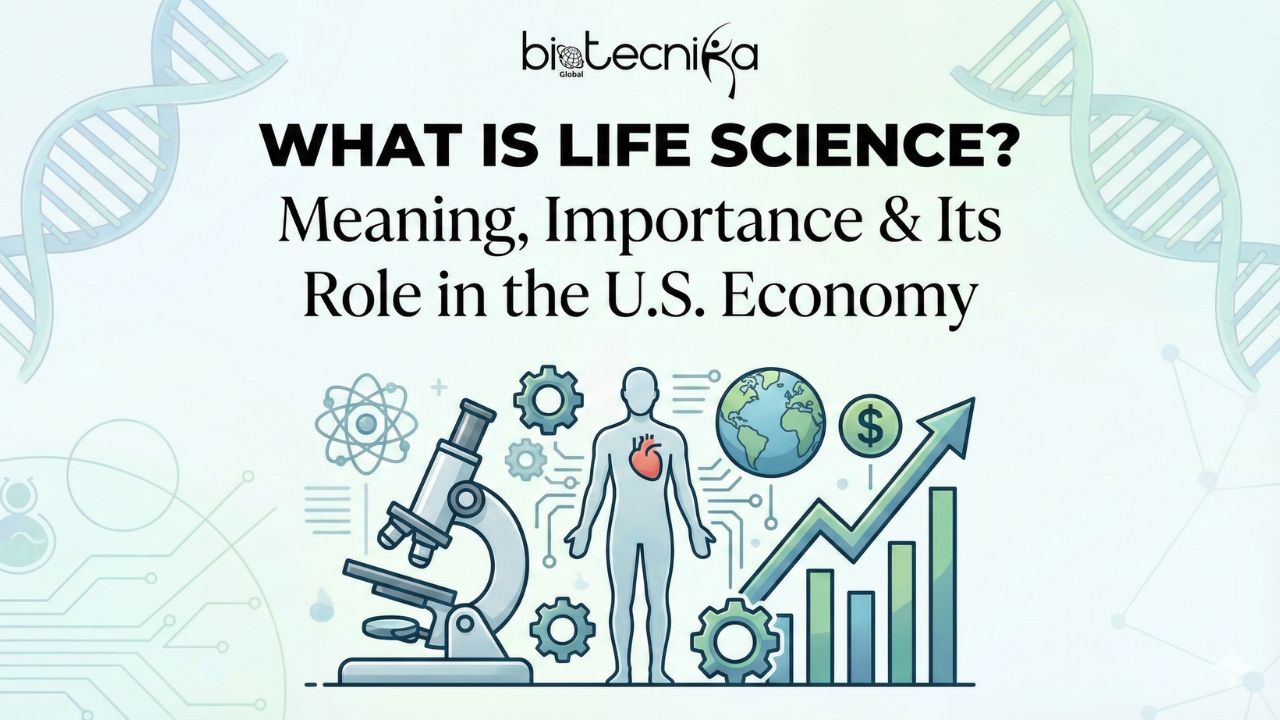
What Is Life Science? Meaning, Importance & Its Role in the U.S. Economy
On a quiet morning in Boston, a young researcher named Elsa stood near a lab window, watching people hurry across the street. Inside the laboratory, tiny cells were dividing under a microscope. They are invisible, yet potent. One of the cells she studied could eventually help treat a rare genetic disorder. Outside, people had no idea how her work could become life-changing. Elsa often said, “Life Science is the Science of Possibilities.” No matter how small a discovery can be. But it has the power to save someone’s life, feed a community, or inspire the next breakthrough. And that’s the magic of life science. It is not just something that happens in laboratories. Life Science is a field with various branches that directly shape our daily lives, our health, and even the strength of the United States economy.
What is Life Science?
It is the study of living things, including humans, animals, plants, and microscopic organisms. Life Science tries to understand it, even if it grows, breathes, reproduces, or simply exists in nature. To put it in a nutshell, it helps us understand life itself and find ways to improve it.
What are the Branches of Life Science?
This field is enormous and includes many branches:
- Biology – the foundation of life science
- Biotechnology – using biology to create valuable solutions
- Genetics – understanding DNA and heredity
- Microbiology – studying bacteria and viruses
- Molecular Biology – exploring what happens inside cells
- Neuroscience – understanding the brain
- Botany, Zoology, Ecology – studying plants, animals, and ecosystems
Why Does It Matter to All of Us?
Though we may not realize it, life science is quietly shaping almost everything around us.
- It Helps Us Live Longer, Healthier Lives.
Vaccines, Antibiotics, Cancer treatments, Organ transplants, Fertility treatments, Diagnostic tests, all these exist because of life-science research.
- It Prevents Future Health Crises
During COVID-19, it was life science researchers who developed vaccines and treatments in record time. Without life science, the world would have taken much longer to recover.
- It Powers Innovation
AI in drug discovery, wearable health devices, telemedicine, and personalized treatments is a blend of life science with technology.
- It Protects the Planet
Life science helps to create climate-resilient crops, clean polluted environments, protect endangered species, and monitor ecosystem health. It is essential for sustainability.
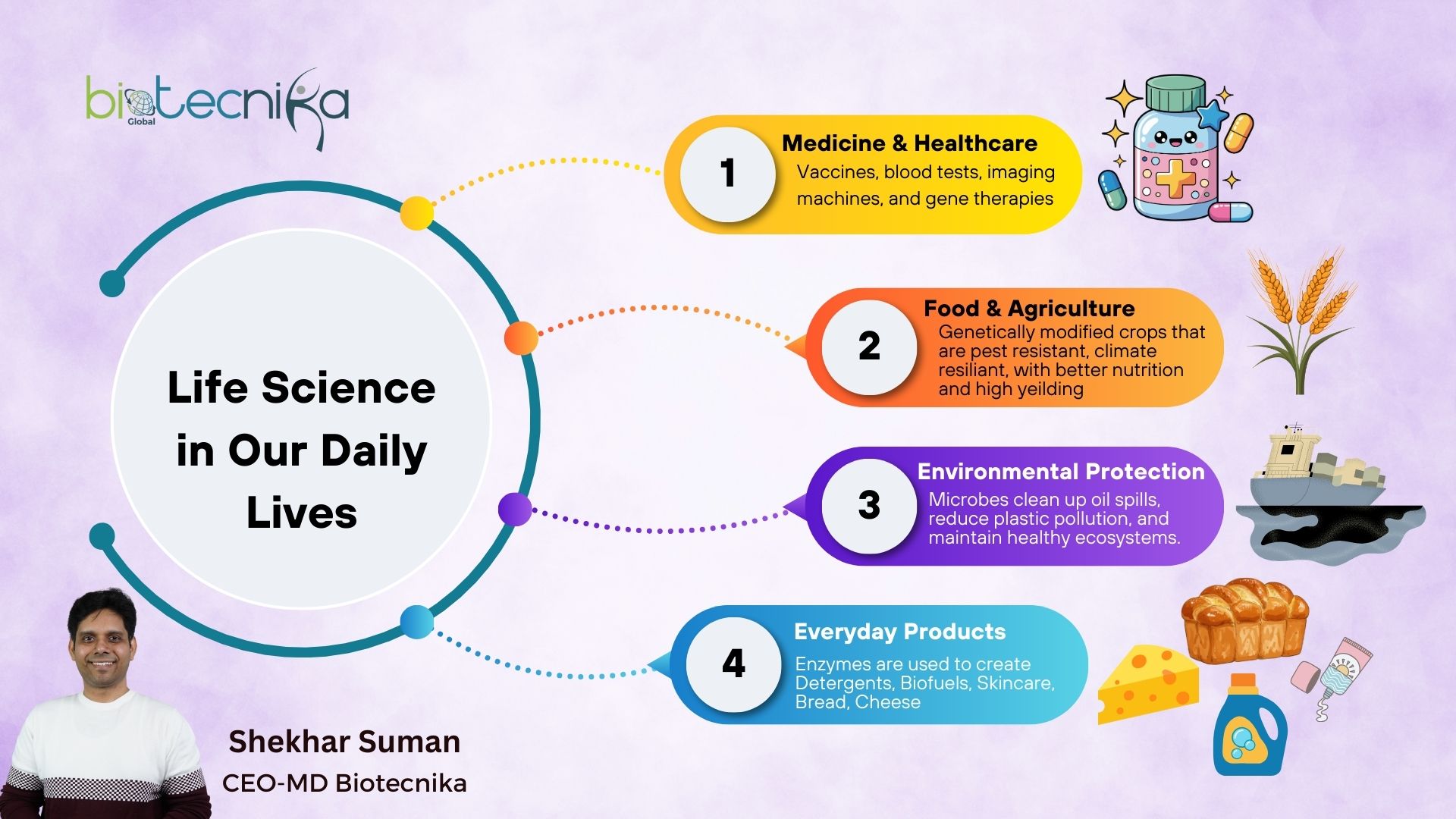
Life Science in Our Daily Lives
People don’t realize how often life science influences their day, mostly.
- Medicine & Healthcare
Vaccines, blood tests, imaging machines, and gene therapies all come from life-science research.
- Food & Agriculture
Researchers create crops that resist pests, survive drought, grow faster, offer better nutrition, and give more yield. This ensures food security for the future.
- Environmental Protection
Biological solutions help clean up oil spills, reduce plastic pollution, and maintain healthy ecosystems.
- Everyday Products
Enzymes and microbes are used in Detergents, Biofuels, Skincare, Bread, Cheese, and other food products.
Top U.S. Cities Leading the Revolution
The United States is home to several world-class life-science hubs:
- Boston–Cambridge is the global biotech capital with top universities and cutting-edge research.
- The San Francisco Bay Area is the place where technology meets biology, and is perfect for AI-driven drug discovery.
- San Diego is a leader in genomics, cell therapy, and biomedical innovation.
- Raleigh–Durham (Research Triangle)is a booming center for biotech manufacturing and research.
- New York–New Jersey Corridor is a powerhouse for pharmaceuticals and biotech talent.
These cities are innovation engines that drive both local and national growth.
How Life Science Education Is Preparing the Workforce of Tomorrow?
The demand for Life Science Talent in the United States is growing very fast, and education is evolving to keep up. Traditional Biology Degrees are very different from Modern Life Science Programs.
Today’s students learn:
- Bioinformatics and data analysis
- Machine learning for biological predictions
- Biotechnology tools like CRISPR
- Lab automation techniques
- Personalized medicine approaches
- Bio-entrepreneurship and innovation skills
Students gain real-world experience through hands-on training, internships, and research projects. Universities are building partnerships with biotech companies, incubators, and healthcare organizations. These help students enter the industry directly with relevant skills. This change is shaping a workforce capable of handling future challenges, right from new disease outbreaks to global food security. This ensures that the United States continues to lead in scientific innovation.
Why More People Are Choosing Life Science Careers?
Students and professionals are increasingly moving into this field. Here’s why:
- It Feels Meaningful
It feels meaningful to work on projects that genuinely help people. The projects include curing diseases, improving health, and solving global problems.
- It Offers Multiple Career Paths
Life Science has a role for everyone, whether you love coding, chemistry, research, management, or engineering.
- It is a High-Growth Industry
As the demand is increasing quickly, there are more job opportunities and excellent salary hikes.
- Technology Makes It Exciting
This field is full of innovation because of AI, automation, gene editing, and precision medicine.
Real Breakthroughs
Here are some world-changing advancements that have happened and are happening in the Life Science field,
- Production of mRNA Vaccines for COVID-19 transformed global health.
- Once-impossible diseases are now possible to cure by Gene Therapy.
- Cancer Immunotherapy uses the immune system of the body to fight cancer.
- Lab-grown meat is one of the sustainable ways to feed future generations.
- Drug discovery took 10 years to be achieved, and now can be achieved in months using AI.
How Startups Are Transforming the Future?
Several places in the United States are witnessing an explosion of life-science startups. They team up with big ideas that help in reshaping biotech, diagnostics, food science, and digital health. These startups often grow out of university laboratories or innovation hubs and bring bold, disruptive ideas into the real world.
Some examples of what these startup companies are working on:
- AI tools that discover new drugs faster
- Portable diagnostic devices that work from a single drop of blood
- Gene-editing therapies for rare diseases
- Sustainable materials made from genetically modified microbes
- Lab-grown seafood and dairy
- Personalized health apps that can predict diseases before symptoms appear
Life-science startups create new jobs, attract billions in investment, and push the boundaries of what is scientifically possible. They make the industries more dynamic, creative, and competitive, and often become the next generation of biotech giants.
How Life Science Will Shape the Future U.S. Economy?
The following decades will bring transformations entirely powered by life science.
- Personalized Medicine helps in treatments based on your DNA
- Bio-Manufacturing helps in the production of biomaterials, fuels and foods. This is replacing traditional factories.
- AI will predict diseases, design new drugs, and simulate biological systems with incredible accuracy.
- Aging research, regenerative medicine and advanced therapeutics will push lifespan boundaries.
- Stronger National Security is provided by Biodefense, Pandemic preparedness, and rapid vaccine development
Conclusion: The Science That Shapes Our World
Life Science starts with simple moments. Like Elsa watching cells divide under her microscope, but it grows into innovations that carve the world. Knowing Life Science helps us live longer, supports millions of jobs, strengthens the United States Economy, and fuels discoveries that touch every part of modern life.
If there is one thing sure about the future, it is this,
Life science will continue changing the world, one discovery at a time.