
Soilless Agriculture
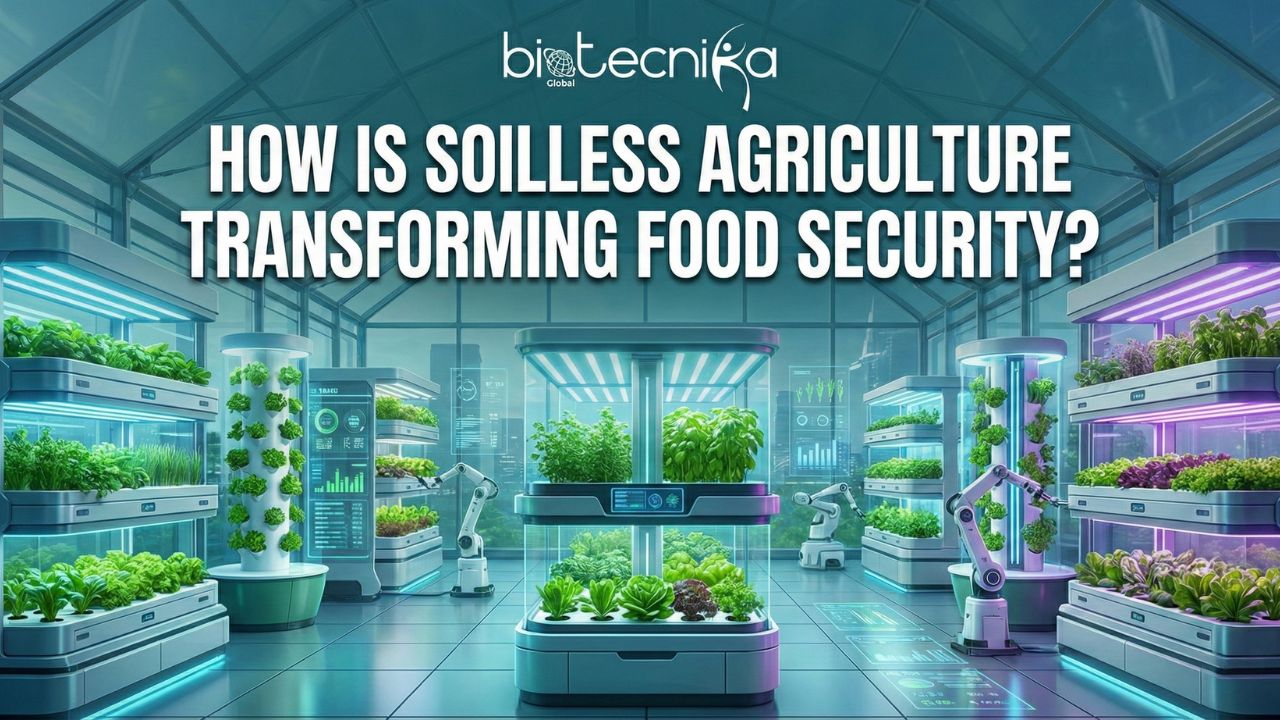
The farm of the future will not be measured in acres, but in floors. Imagine that you are standing in the middle of a bustling city center. It is the end of winter. Snow is piling up on the footpaths, and the temperature has risen and fallen well below freezing. Yet, inside a warehouse just a block away, it is a perfect warm summer day. Thousands of lettuce heads, vibrant basil, and ruby-red strawberries are surviving in the stacked high ceiling. The roots of the plants are hanging. They were not present deep below the earth, but in mist and running water. This is not a scene from a science-fiction novel. It is the rapidly expanding reality of Controlled Environment Agriculture. We are witnessing the dawn of Soilless Agriculture. Agriculture without Soil is a revolution in Agricultural Biotechnology that promises food security solutions by breaking the dependence on the ground beneath our feet.
Why We Need a Change in Agricultural Biotechnology?
The equation was simple for many years. Seed + Soil + Sun + Rain = Food. But now the math is falling. To secure our food plates for the future, we are doing something radically different. We are taking soil out of the equation.
We are losing arable land that is used for agriculture to urbanization and erosion at an alarming rate. Agricultural land is being paved, and fresh water is becoming liquid gold. Climate change has adversely affected the weather patterns. As the population is increasing day by day, we need to feed atleast 10 billion people. But one thing we are lacking is the traditional farming method. These conventional farming methods require healthy soil, which is increasingly hard to find nowadays. The entry of Agriculture without soil is not just a backup plan; it is an upgrade!
The New Big Three: Hydroponics, Aeroponics, and Aquaponics
Soilless Agriculture moves farming from the field to the factory, the rooftop, and even the desert. This all relies on precise engineering to give the plants what they actually need.
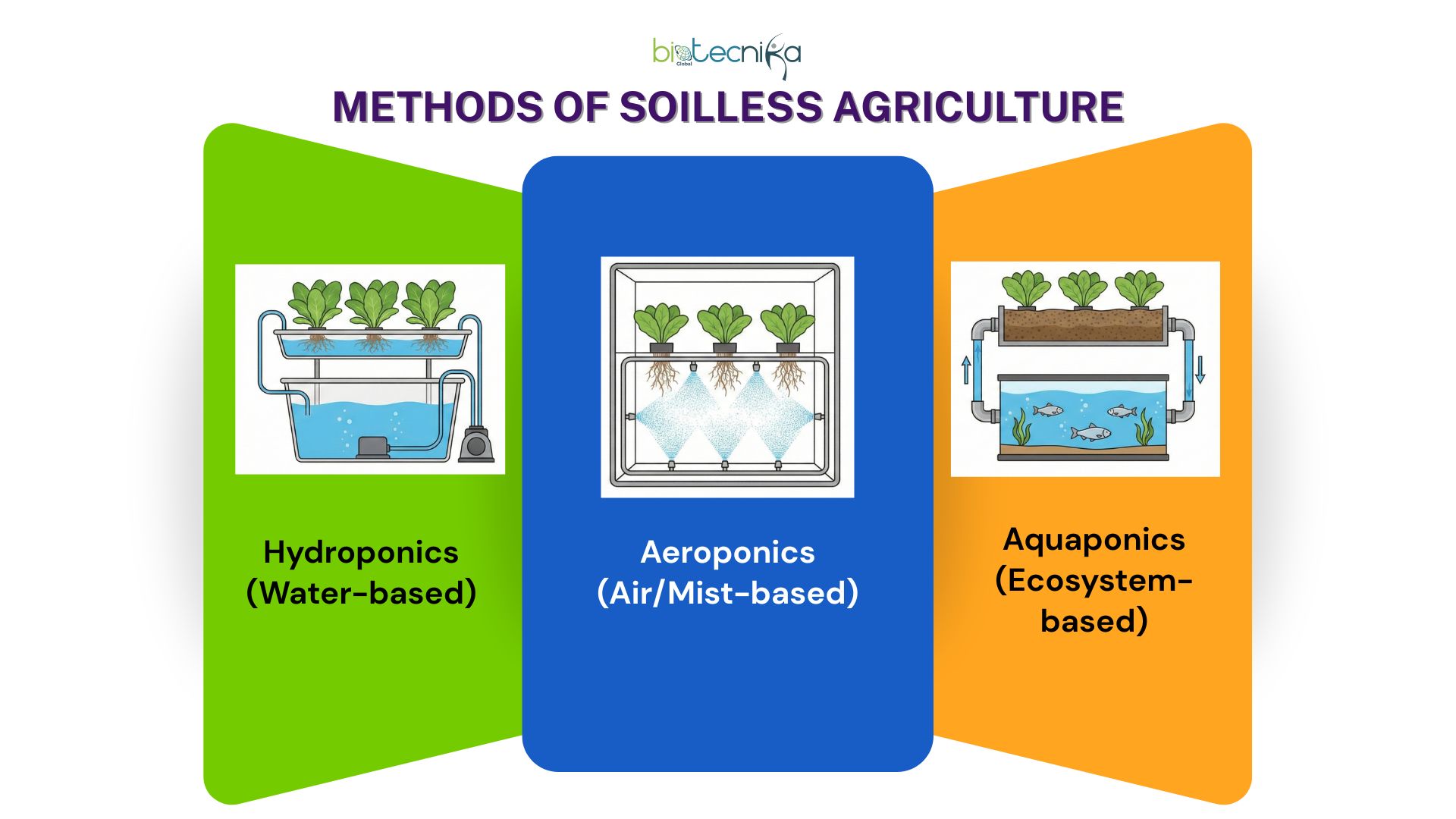
There are three main players in this revolution. They are as follows,
- Hydroponics: It is one of the most common methods. Plants sit in a sterile substrate like coconut coir or rockwool while nutrient-rich water flows over their roots.
- Aeroponics: This method is a high-technology speedster. This was originally championed by NASA. Roots hang suspended in the air. The nutrients are misted on them. This provides maximum oxygen and leads to massive growth rates of the plants.
- Aquaponics: It is the ecosystem builder. This combines fish farming with hydroponics. The waste materials from the fish provide nutrients for the plants. In turn, the plants clean the water for the fish to survive.
The Role of Biotechnology in Agriculture
In the conventional farming methods, the seeds are bred to be tough. They need to survive drought, heavy wind, and pests. In Soilless Agriculture, the environment required for the plants to grow is perfect. So there is no need for the farmers to toughen the plants.
Researchers are now breeding crops specifically for these controlled environments. They optimize plants using Plant Biotechnology techniques to be compact, quick to harvest, and have dense flavor. These optimizations are all possible due to genetic engineering methodologies.
Why is this transforming Food Security Solutions?
- Water is the New Gold: Soilless agriculture requires up to 90% less water than field farming, as this method can recapture and recycle water. Whereas, the traditional farming methods gulps up to 70% of the world’s fresh water.
- Location Independence: This method allows for building a vertical farm even in a snowy basement in Canada or a shipping container in the scorching heat of Dubai. Food is grown using this soilless agriculture method, where large numbers of people live.
- Climate Proofing: There will be no climate or weather changes in a controlled environment. There will be no droughts, no floods, and no locust swarms. This method has the harvest season for all 365 days of the year.
Traditional Soil Farming vs. Soilless Agriculture
|
Feature |
Traditional Soil Farming | Soilless Agriculture (CEA) |
|
Water Usage |
High (Subject to evaporation & runoff) |
Very Low (Recycles ~90-95% water) |
|
Land Use |
Expansive (Horizontal acres) |
Minimal (Vertical stacking) |
|
Location |
Dependent on fertile land & climate |
Anywhere (Urban centers, Deserts) |
|
Pesticide Use |
High (To fight soil-borne pests) |
Minimal to None (Sterile environment) |
|
Harvest Frequency |
1–2 times per year (Seasonal) |
10–12 times per year (Continuous) |
| Weather Risk | High (Vulnerable to storms/drought) |
Zero (Climate-controlled) |
Best Crops for Soilless Agriculture Systems & Their Benefits
We cannot grow large fields of wheat or corn indoors because the energy costs for lighting are too high. But a huge portion of our diet is perfect for this method. This method provides high crop yields.
|
Crop Category |
Examples |
Why It Works |
|
Leafy Greens |
Lettuce, Kale, Spinach, Arugula | Fast turnover (30 days seed to harvest); roots love the high oxygen of aeroponics. |
|
Herbs |
Basil, Mint, Cilantro, Parsley |
Higher oil content (more flavor) due to stress-free growth; high market value. |
|
Vine Crops |
Tomatoes, Cucumbers, Peppers |
Can be trained to grow vertically; yields are significantly higher than field equivalents. |
|
Berries |
Strawberries |
Grown at eye-level for easy picking; cleaner fruit with no soil grit or rot. |
| Microgreens | Radish shoots, Pea shoots |
Incredibly nutrient-dense; harvestable in just 7-10 days. |
The Soilless Agriculture is not replacing the traditional farmers. It is empowering the farmers with new tools. It is not about replacing nature; it is about helping nature rest. This is moving high-intensity farming into controlled environments, making the farmland recover and rewild.
The Soilless Agriculture is a new Revolution. It is a future where deserts can bloom with lettuce, where skyscrapers feed the people living in them, and where eating local is possible even in the most inhospitable climates on Earth.
Food Security solutions do not just mean having enough calories to survive. It means having a sustainable, resilient system that can bear the storms of the future. And sometimes, we have to look up to keep our feet on the ground.