

Red Biotechnology
Not for weeks, not for months, but for years. Imagine that your child has suffered for more than twelve years. This is the story of the Parker family. Their son Leo had terrible seizures. They went to many doctors, took several MRIs, and pills that turned a regular kid into a zombie. The doctors diagnosed with “Idiopathic epilepsy”. It is nothing but “We don’t know” in medical terms.
Then there was a breakthrough. Researchers looked at his DNA Sequences and found a typo using Red Biotechnology instead of just blood and brain waves. There was just one tiny error in the KCNQ2 gene. It turned out that Leo didn’t need any anti-seizure medications. He needed a specific sodium blocker. The seizures stopped within weeks. Leo “woke up” for the first time since he was a toddler.
Advancement in Red Biotechnology is the magic. Let us get into this article and understand more about Medical Biotechnology, Translational Medicine, and so on.
What is Red Biotechnology?
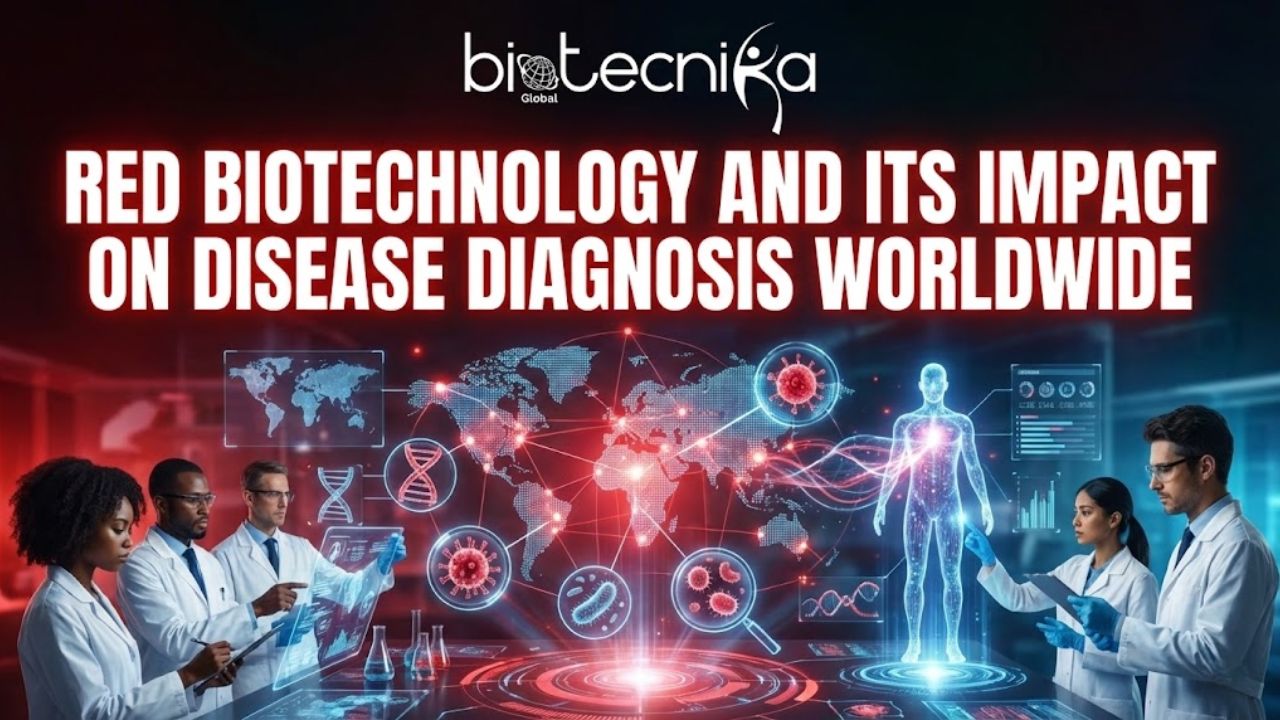
If Biotechnology is a colour wheel, Red Biotechnology is the saving one in our lives. While “White Biotechnology” is about factories, “Green Biotechnology” is about crops, and “Red Biotechnology” is all about Medicines. It is the branch that develops new drugs and vaccines. It also figures out what is wrong with our bodies. It deals with Medical Biotechnology, Personalised Medicine, and Translational Medicine.
Technologies Responsible for the Change
We have to look at the tools for understanding this revolution.
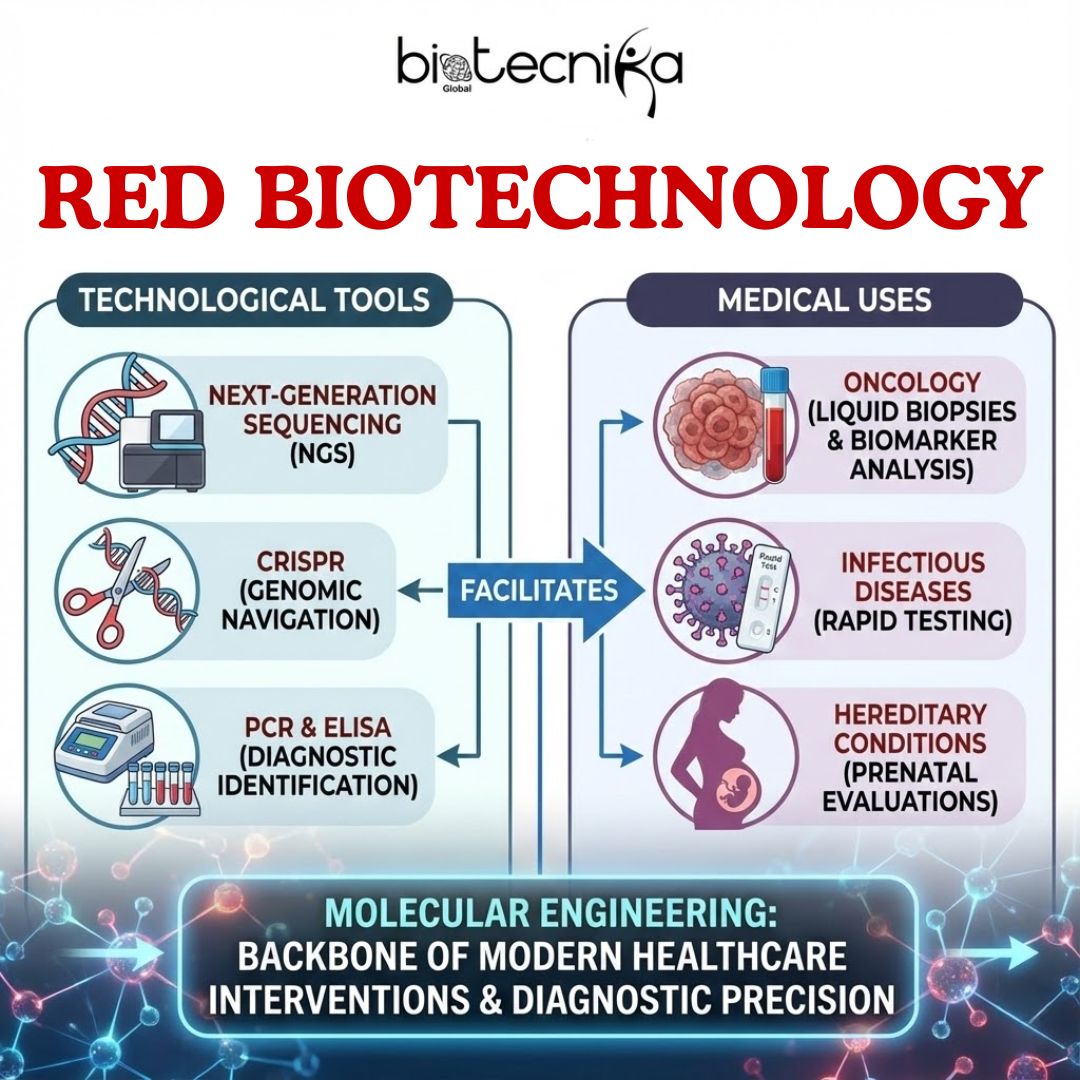
1. Next-Generation Sequencing (NGS)
Do you remember that the Human Genome Project took 13 years and billions of dollars to study the DNA of a single person? But today, it is possible to do it in half a day for the price of a mid-range smartphone. This is the backbone of modern diagnosis. This allows us to understand the DNA of a patient and find out the errors that cause diseases.
2. Diagnostics using CRISPR
We may have heard of CRISPR. CRISPR is a gene-editing technology. It acts as a molecular scissor for editing genes. But the scientists realized that it can also be used as a search engine. CRISPR can be programmed to target a specific viral genome or a mutation associated with cancer cells. It gives a signal when the match is found. It is one of the fastest and cheapest methods. It can be done on a paper strip.
3. Liquid Biopsy
Tumours are messy. You have to cut into the body to check for a tumour. They shed small bits of DNA into the bloodstream. It is very painful and risky. Red Biotechnology makes it simple. The floating scraps of cancer can be found in the blood drawn from a patient. A tumour can be detected even before it is large enough to be seen on a scan.
Impact of Red Biotechnology on Disease Diagnosis
Red Biotechnology is reshaping diagnosis across the board, but three areas are seeing the most dramatic changes.
1. Oncology (Cancer)
The old way of diagnosing cancer was often “wait and watch.” The lump has to be large enough to feel or be visible on an X-ray. By then, millions of cancer cells might have already spread.
Today, Medical Biotechnology allows the prevention of any disease at the molecular level. We are shifting toward a world where an annual blood test can spot ovarian or pancreatic cancer at Stage 0 or Stage 1. This is not just a diagnosis; it is a cure. Treating cancer at the first stage is more successful than treating it in the fourth stage.
Traditional vs. Red Biotech Diagnosis in Cancer
| Feature | Traditional Diagnosis (The Old Way) | Red Biotech Diagnosis (The New Way) |
| Method | Physical exams, X-rays, Tissue Biopsy | Liquid Biopsy (Blood), Genetic Sequencing |
| Detection Time | Late (when symptoms/masses appear) | Early (detects DNA fragments before symptoms) |
| Invasiveness | High (surgery often required) | Low (simple blood draw) |
| Precision | Low (identifies “cancer”) | High (identifies specific mutations, e.g., EGFR+) |
| Turnaround | Days to Weeks | Hours to Days |
2. Infectious Diseases
Red Biotechnology cannot be mentioned without the events of 2020. The SARS-CoV-2 genome was identified rapidly. This was one of the biggest successes of Medical Biotechnology.
But it goes beyond COVID. It takes 48 to 72 hours to grow traditional bacterial cultures in a petri dish. If a patient has a blood infection, they may die even before the results come. Deadly bacteria or any microbes responsible for the blood infection can be identified using new molecular diagnostic tools within 3 hours. This helps the doctor prescribe which antibiotic to use. This saves lives and prevents antibiotic resistance.
3. Rare and Genetic Diseases
There are more than 7,000 known rare diseases, and it used to take 7 years for diagnosis. Using Whole Genome Sequencing, rare diseases can also be diagnosed within weeks. Rapid genetic testing is becoming a lifesaver for newborns in intensive care. This immediately enables doctors to diagnose metabolic disorders and adjust the baby’s diet to prevent brain damage using Medical Biotechnology.
Essential Red Biotech Tools and Their Diagnostic Applications
| Tool | How it Works | Real-World Application |
| PCR (Polymerase Chain Reaction) | Amplification of small DNA sequences millions of times to detect them. | Used to detect viruses like COVID-19, HIV, and Hepatitis. |
| Microarrays (Gene Chips) | A slide with thousands of DNA spots that tests for many mutations at once. | Checking a tumour to see which genes are turned “on” or “off” to predict if chemotherapy will work. |
| ELISA (Immunoassay) | Antibodies are used to detect proteins or hormones in the blood. | Diagnosing allergies, pregnancy tests, and tracking HIV antibodies. |
| FISH (Fluorescence In Situ Hybridization) | Uses fluorescent probes to “paint” specific chromosomes. | Used to diagnose Down Syndrome or Leukemia by looking at the chromosome structure. |
Challenges of Red Biotechnology
We must be realistic, while the science is breathtaking. Red Biotechnology faces certain hurdles.
- Cost Barrier: High-tech diagnostics remain expensive, despite reduced sequencing costs. A liquid biopsy can cost thousands of dollars. These advanced tools are still out of reach in developing countries, where basic healthcare is a significant struggle. There is a risk of creating a two-tier health system. One for those who can afford Personalized Medicine and one for those who cannot.
- Data Overload and Anxiety: Sometimes, it is tough to understand DNA sequences when reading them. The genetic tests sometimes reveal a “Variant of Uncertain Significance”. This means that there are unknown changes in the DNA. It says it is unable to determine whether it is harmful or harmless. This can cause immense anxiety for patients who are told, “We found something, but we don’t know what it means.”
- Ethical Concerns: Red Biotechnology can predict the future. It can edit genes. But it doesn’t always give the power to change it. This preventive diagnosis opens complex ethical debates about privacy, insurance, and mental health.
Diagnosis 2.0
The future is Multi-omics. We will not only look at DNA but also at proteins, metabolic activities, and the gut microbiome simultaneously. To specify the data, AI will generate a Digital Twin. Doctors could test drugs on your digital twin before prescribing them to you.
Lab-on-a-Chip devices are beneficial. Imagine that you could diagnose flu, step, or COVID, by plugging a USB stick into your phone and placing a drop of blood on it. Transitional medicine is solely responsible for this revolution. This transitional medicine will bring the laboratory into your pockets.
Conclusion
The story of medicine is changing rapidly. We are moving to the era of “Precision” from the era of “Generalization”.
Red Biotechnology has given us a new pair of glasses. It has turned diagnosis from a guessing game into a data science problem. It is stopping outbreaks; they are even starting. It is detecting cancer even in its early stages and giving names to diseases that were once mysteries.
Personalized medicine and translational medicine connect lab discoveries to patient care by designing treatments to an individual’s genes, lifestyle, and disease biology.
They are responsible for speeding up the journey from research to real-world therapies, making healthcare more precise, predictive, and effective.
For patients like Leo and all of us, Red Biotechnology gives us the strength not to fear the unknown, deadly diseases. We can read it. We can understand it. And eventually, we can fix it.