

Food Microbiology
Where there is fermentation, there is life – Louis Pasteur.
It was a busy evening in Suburban Chicago. A family sits down for a dinner of pre-prepared Caesar salad and grilled chicken. They were enjoying their dinner. They were eating, laughing, and talking about their day. They did not think about what they just consumed. This is all because they trust what they eat. They trust that the lettuce is not contaminated with Escherichia coli. They trust that the chicken does not contain any Salmonella species. They trust that the yoghurt they had for breakfast contains the live microorganisms promised on the label. This is a world full of microorganisms. And the food we eat also contains microbes that are beneficial to our health. This is Food Microbiology.
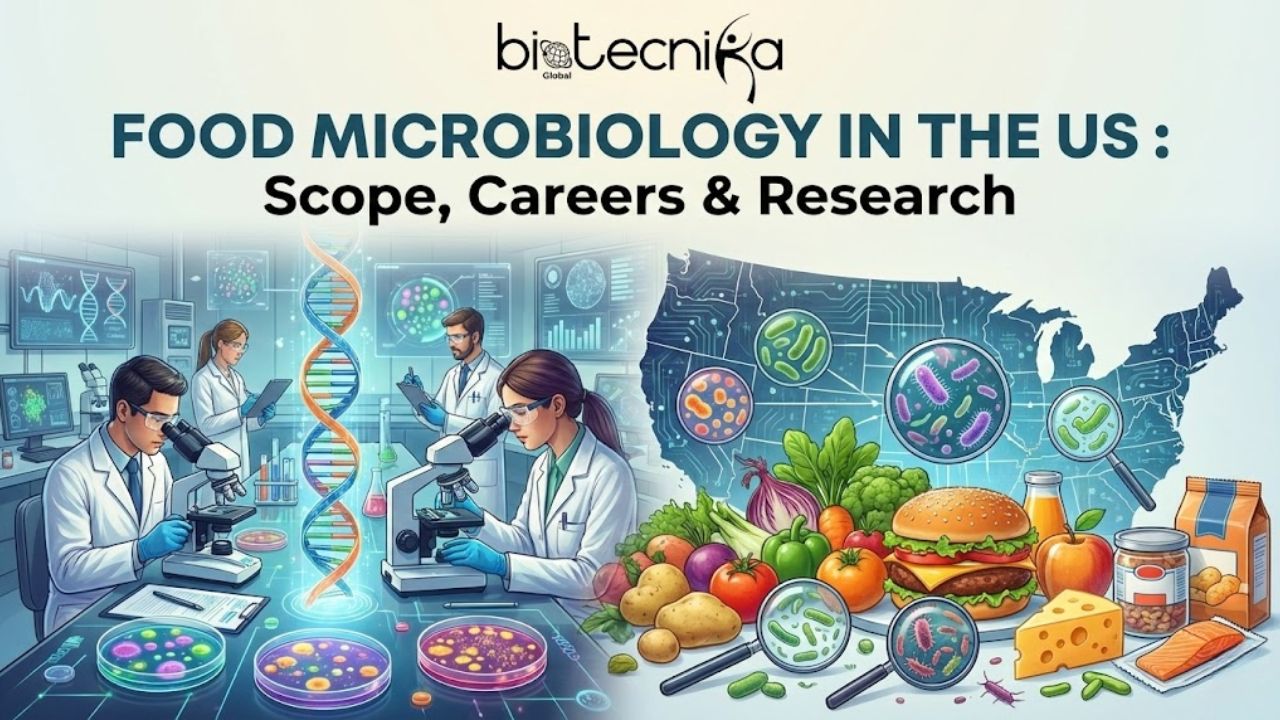
Many researchers are working tirelessly across the United States in Fermentation Technology. Most of the Food substances we eat are fermented ones. Right from the Bread to the Kimchi salads. Food Microbiology is responsible for this breakdown. It is a cutting-edge field that prevents deadly outbreaks and creates delicious, nutritious, and novel products. The scope of Food Microbiology in the USA is growing broader in both horizontal and vertical ways. It offers various opportunities across research, the food industry, and food safety. Through this article, let us dive into this microscopic world with macroscopic impact.
What is Food Microbiology?
To understand Food Microbiology, one must first understand what is meant by Microbiology. Microbiology is the study of living organisms that are too small to be seen with the naked eye. Microorganisms will include bacteria, fungi, yeasts, molds, protozoans, and viruses.
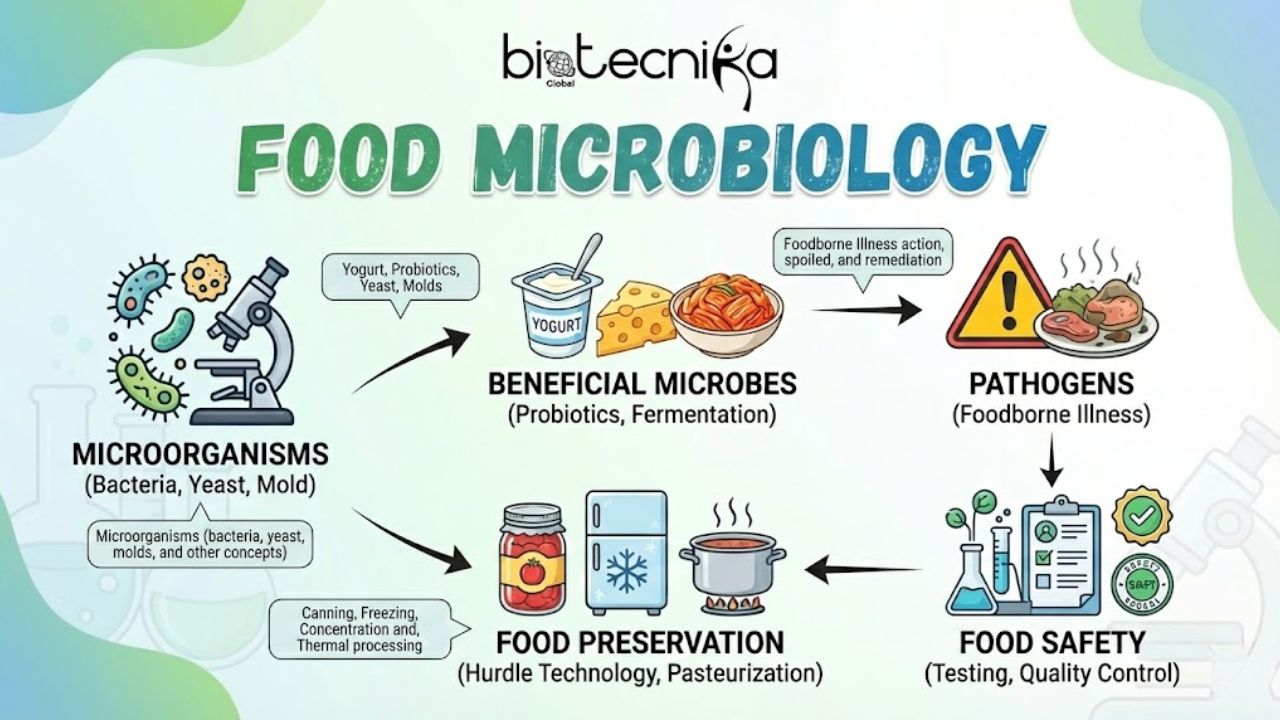
Food Microbiology is the study of microorganisms that are present in our food. They play multiple roles such as Food Preservation, Fermentation, and Food Spoilage.
On one end, we have the good guys. They are the beneficial ones and essential workers. Without them, we wouldn’t have had bread, yoghurt, cheese, wine, soy sauce, and more. On the other end, we have the bad guys. They are the harmful ones and are known as pathogens. They cause illness, spoilage, and massive economic losses. Food Scientists are the detectives tasked with knowing which are beneficial and harmful ones.
The US Landscape
The United States of America has one of the safest and most abundant food supplies in the world. But maintaining the standards is very hard. The Food industry in the USA is a trillion-dollar juggernaut. Before reaching anyone’s plate, food substances have to travel miles. Lettuce grown in California might end up in a Sandwich in Maine three days later. Each and every step in the journey of a food substance has certain risks. From harvesting through processing, packaging, shipping, and storage, all activities must be carefully monitored for contamination. It is a process with many complexities.
The demand for skilled food microbiologists in the USA is huge due to these complexities. The Food Safety Modernization Act (FSMA) was signed into law which changed the focus of federal food safety regulation authorities from responding to contamination to preventing it. This change led food companies in the USA to recruit more experts for testing and to implement better environmental monitoring programs.
Scope of Food Microbiology
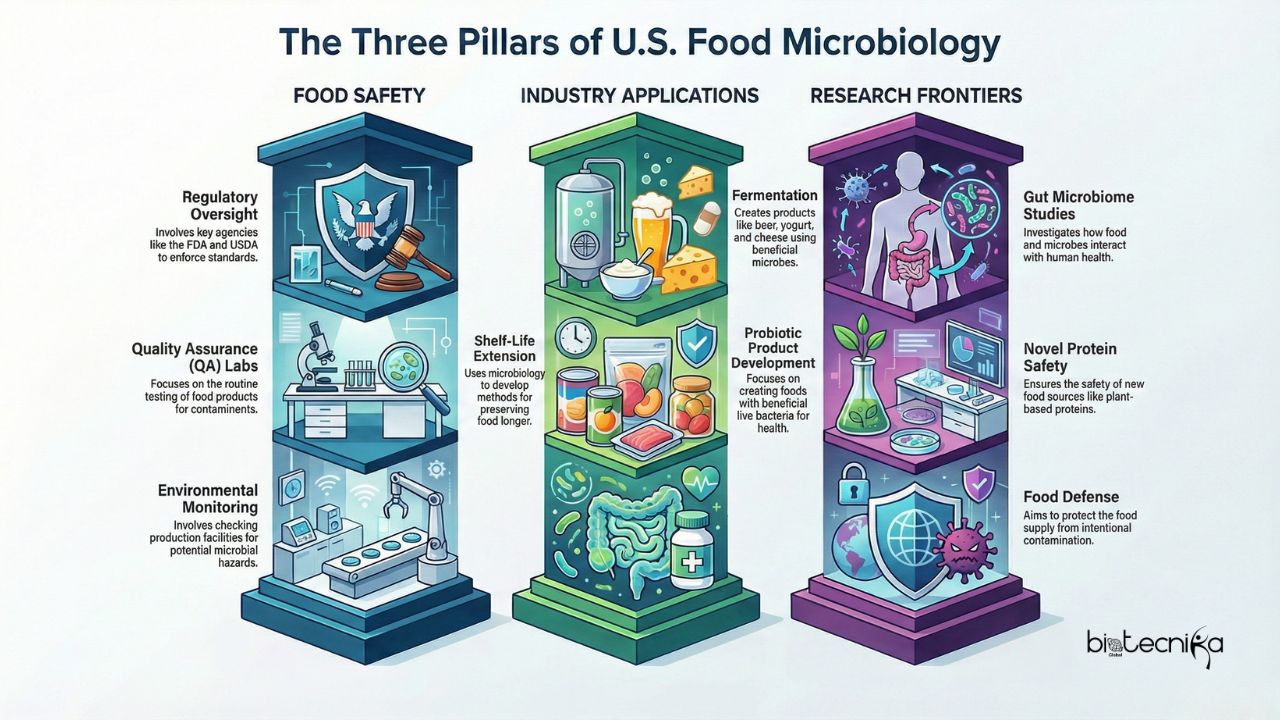
Here is how the scope of this field breaks down into three main pillars,
1. The Guardians
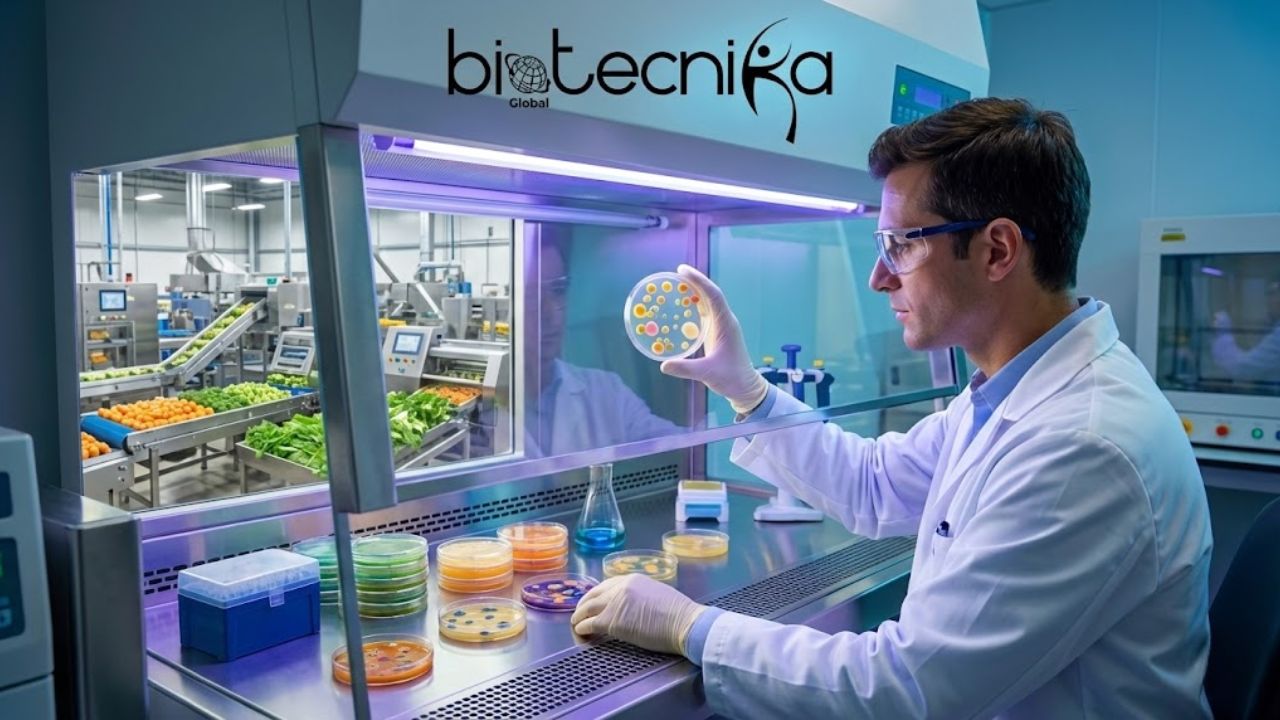
They provide Food Safety opportunities. When you hear about a Peanut butter recall on the news, food safety microbiologists are the ones who are responsible for handling the crisis. Food Safety is non-negotiable in the USA. Companies cannot afford to make people fall sick. Food Microbiologists prevent food contamination by detecting it in advance.
- Routine Testing: Food Microbiologists will work in th Quality Assurance Laboratory at a food manufacturing plant. They are responsible for testing raw ingredients and finished products going out. They ensure that the food that is out meets safety standards.
- Environmental Monitoring: Food Scientists not only test the food materials. But they also test the whole factory. They take swab samples directly from the conveyor belts, drains, and floors to identify harborage sites for dangerous microorganisms such as Listeria monocytogenes.
- Regulatory & Auditing: Food Microbiologists also work in government bodies like the Food and Drug Administration (FDA) or the United States Department of Agriculture (USDA). These roles involve inspecting facilities and ensuring compliance with federal laws.
2. The Creators
Not all microorganisms are just killers. Many are creators. They make food better, last longer, or taste different. This mostly happens in the food industry.
- Fermentation Renaissance: Fermented foods became an obsession for many people in the USA and other countries. It goes beyond traditional items like sourdough and cheese. We are seeing a boom in kefir, kimchi, craft beer, and pickles. Food Microbiologists in this field are like microbial farmers. They must select specific yeast strains to achieve a particular flavour profile in a wine. They should get the perfect texture in a Greek yoghurt using a specific bacterial strain. They must make sure that the beneficial microorganisms survive while keeping out those that cause spoilage.
- Shelf-Life Extension: How does a bread loaf stay mould-free for two weeks? How does the oat milk remain fresh in a carton box without refrigeration? Food Scientists work on research and Development teams in the food industry to test products. They deliberately add microorganisms that cause spoilage to the food in a controlled environment. They do this to see how long the product survives with various preservation methods. They replace the synthetic preservatives that consumers are trying to avoid by developing natural antimicrobial agents.
3. The Explorers
The research sector in the USA is vibrant if you are curious and want to push the boundaries of knowledge. This happens in the research that takes place in the large universities, government research centers, and corporate R&D headquarters.
- Microbiome Frontier: Researchers are studying how the food consumed interacts with the billions and trillions of bacteria already present in the gut. These are called the Normal Flora of the body. Food Scientists are conducting research on Prebiotics and Probiotics. They are trying to figure out how specific foods affect the health of the gut microbiome.
- New Food Products: There has been a significant increase in plant-based proteins and lab-grown meats in the US market. All these new food matrices create new microbiological challenges. Food Microbiologists are analyzing how bacteria and other microorganisms grow differently on different products. They are trying to figure out whether every new product reaching consumers is safe. This involves research into protecting the food supply chain from intentional adulteration or acts of bioterrorism using biological agents.
Dynamic Duo of Gut Health
The dynamic duo is Prebiotics and Probiotics. To understand prebiotics and probiotics, first we have to realize that we are not alone. Our bodies are home to trillions of microorganisms, including bacteria. They live on our skin, mouth, respiratory system, and, most importantly, in our digestive system. They live in all over the human body as Normal Flora.
The gut microbiome is the ecosystem that contains many microorganisms responsible for good health. The tools to keep this ecosystem healthy are Probiotics and Prebiotics. Imagine that Probiotics are the seeds of the plants, and Prebiotics are the fertilizers that help them to grow properly.
Here is the breakdown of how they work, where to find them, and why they matter.
1. Probiotics: The “Good” Bacteria
Probiotics are live microorganisms, such as bacteria and yeasts, that are beneficial. They provide health benefits when consumed. They keep the gut happy by helping to digest food, fight off bad bacteria, and regulate the immune system.
- How they work: When we consume Probiotics, they travel to the colon and set up shop, crowd out the harmful pathogens, and produce beneficial substances.
- Key Players:
- Lactobacillus: Commonly found in yoghurt and fermented foods.
- Bifidobacterium: Found in some dairy products and naturally occurring in a healthy gut.
- Saccharomyces boulardii: A beneficial yeast.
- Top Food Sources: Yoghurt (must say “Live and Active Cultures” on the label), Kefir (a fermented probiotic milk drink), Sauerkraut & Kimchi (refrigerated, not shelf-stable types), Miso (fermented soybean paste), Kombucha (fermented tea)
2. Prebiotics: The “Fertilizer”
They are one of the types of dietary fiber that cannot be digested by the human body. However, the beneficial bacteria present in the gut can digest them. They are in the undigested state when they pass through the stomach. They become a feast for the beneficial bacteria present in the colon of the intestine.
- How they work: Prebiotics feed the good bacteria by fermenting in the lower gut and allow them to multiply. Short-Chain Fatty Acids (SCFAs) are produced by the fermentation process. They nourish the colon cells.
- Key Benefits: They help regulate blood sugar levels, improve calcium absorption, and keep digestion regular.
- Top Food Sources: Chicory root (one of the highest sources), Dandelion greens, Garlic & Onions (raw is best), Bananas (especially slightly green/unripe ones), Asparagus, Oats & Barley
Good, Bad, and Ugly
| Category | Microbe Examples | Typical Role of Microbiologist | US Industry Impact |
| The “Bad” (Pathogens) | Salmonella, E. coli O157:H7, Listeria monocytogenes | Detection & Elimination. Testing products and environments to ensure zero presence. | Multi-million dollar recalls, lawsuits, FSMA compliance pressure. |
| The “Ugly” (Spoilage) | Various molds (Aspergillus), yeasts, and Pseudomonas bacteria | Control & Prevention. Developing preservatives or packaging to stop growth and extend shelf life. | Massive food waste and economic loss for retailers. |
| The “Good” (Beneficial) | Lactobacillus (yoghurt), Saccharomyces cerevisiae (bread/beer) | Cultivation & Optimization. Managing fermentation conditions for flavour, texture, and health benefits. | The booming probiotics and craft fermentation markets. |
Career Path and Outlook in the US
So, there comes a question: how do you get into this field in the USA? The golden ticket to enter this field is a Bachelor’s degree in Microbiology, Food Science, Biology, or a related field. A master’s degree or a PhD is often required when you have to get placed in advanced research or high-level management positions in food companies. The job market is robust. In states like California, Illinois, Wisconsin, and Georgia, food processing is prominent. Microbiologists are required wherever food is being made. Although salaries vary by location and education level, Food Microbiology is a stable career. People will always need to eat, and they will always need that food to be safe.
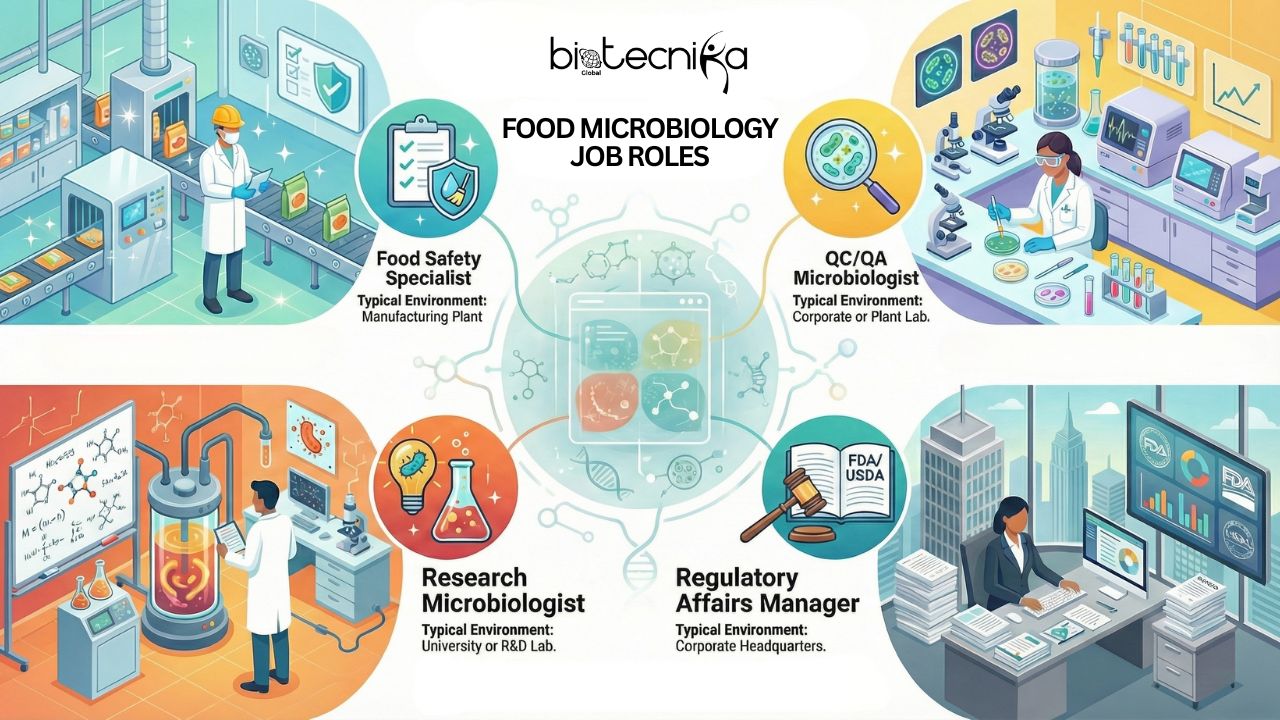
Common US Job Titles in Food Microbiology
| Job Title | Typical Environment | Key Responsibility |
| Food Safety Specialist/Coordinator | Manufacturing Plant | managing daily sanitation and safety protocols on the factory floor. |
| QC/QA Microbiologist | Corporate Lab or Plant Lab | Routine benchwork testing samples for pathogens and spoilage indicators. |
| Research Microbiologist | University or Corporate R&D | Developing new methods for detection or creating new fermented products. |
| Regulatory Affairs Manager | Corporate Headquarters | Ensuring the company complies with all FDA/USDA microbial regulations. |
The scope of food microbiology in the US is enormous and incredibly relevant to everyday life.
Food Microbiology is a field that demands scientific accuracy but also offers the chance to be creative. It is about protecting people from the invisible dangers posed by pathogens. And simultaneously using invisible allies to create the new food products we love to eat.
The reliance on skilled food microbiologists will continue to grow as the food industry expands with new plant-based alternatives and the global food supply chains become more complex.
Food Microbiology is the perfect Petri dish for your talent if you are looking for a science career in the US that offers knowledge and stability. Your work would keep millions of people safe every day.