

JP Morgan Healthcare Signals Oral Obesity Drug Revolution
The biggest news at the 44th Annual JP Morgan Healthcare Conference this week in San Francisco has been the focus on Obesity Treatments and AI’s role in Drug Discovery. Each year, this event is the largest investor conference in the healthcare industry, so it provides critical insight into expectations for future trends in Medicine.
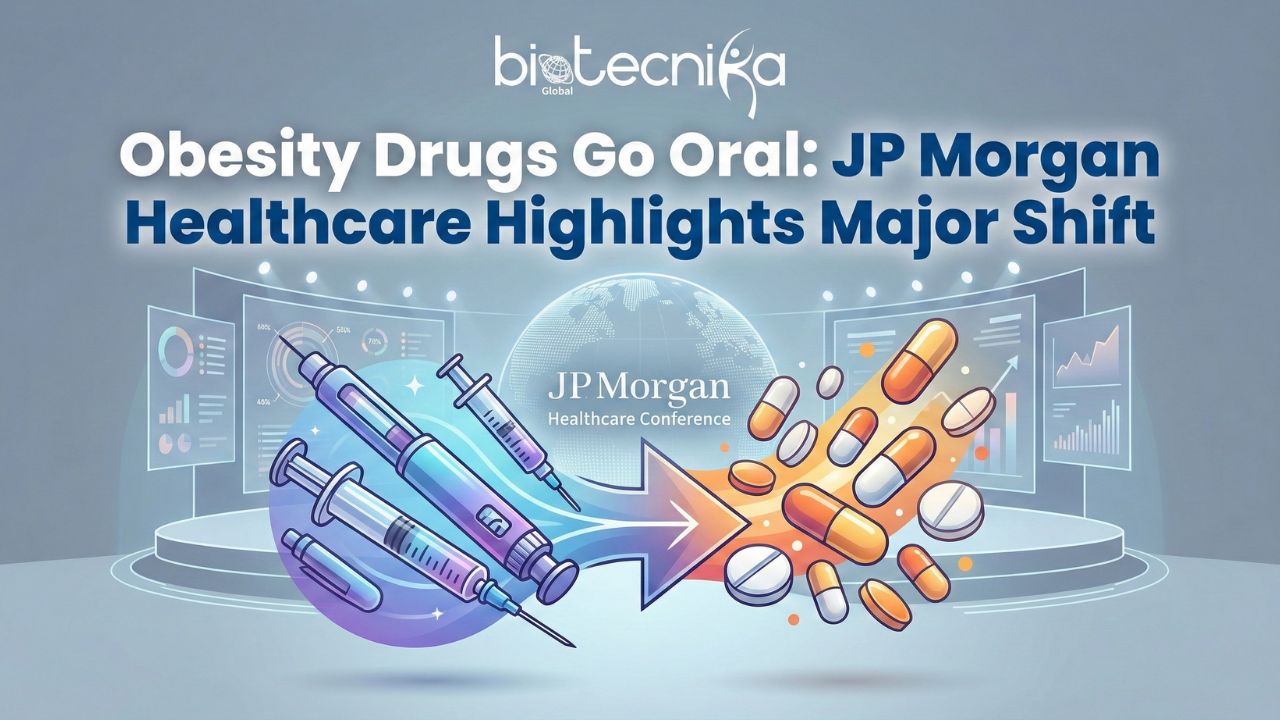
The biggest announcement from this year’s conference was around delivery mechanism changes for Obesity Medications. For decades, the majority of medications for obesity have been given through weekly injections; however, now the vast majority of pharmaceutical companies are committing to developing daily oral obesity medicine instead. The goal of this shift is to ensure that the *entire* population is able to access obesity treatments prior to requiring the use of early adopter facilities & specialists. Further, it is expected that Patients will be more likely to adhere to Daily Medication schedules as they will be able to use Daily Pills with much less difficulty than the Injections used in the past.
Historically, Novo Nordisk has been the leader in the development & commercialization of Obesity Medications; however, the company recognizes that competition is expanding, especially in the IDN (Integrated Delivery Network) and global markets. Novo Nordisk anticipates that by the end of the decade, one-third of patients suffering from obesity will be treated with Oral Weight Loss Drugs rather than Injectables. This trend indicates a significant shift toward making Obesity Treatment more accessible to a larger number of Patients, rather than only the select few who have access to specialists.
Eli Lilly has demonstrated its strong injectable portfolio, including the successful obesity and diabetes medication, Mounjaro. Eli Lilly’s new oral GLP-1 treatment, called Orforglipron, was also introduced at this Conference, and is intended to be a maintenance drug for patients who have lost weight through injectables. It is also a simpler option for patients who prefer taking medications daily instead of injecting them.
A significant innovation associated with Orforglipron is that it can be taken without strict meal timing, unlike other oral GLP-1 medications previously released. Eli Lilly states that this could help improve adherence to medication protocols for some patients and create an easier pathway for them to maintain their weight loss with medication. Eli Lilly plans to submit an application to the Food and Drug Administration for approval of Orforglipron in 2026, which would expand the use of oral weight-loss medications.
The Conference also indicated that weight loss medications are now being marketed as long-term, cardiometabolic treatments and are being viewed as a means to treat chronic cardiovascular disease and reduce the risk of developing chronic metabolic diseases. This approach supports the changing perspective within the pharmaceutical industry from treating symptoms to preventing chronic health issues.
While obesity drugs are making headlines, artificial intelligence (AI) is another major focus at the conference. AI is no longer just a topic for experimentation; it’s becoming a core part of how new drugs are discovered and developed. Companies are now using advanced computing, automation, and data-driven models to accelerate molecular design, testing, and clinical development at scale.
A prime example of this is the $1 billion joint AI drug-discovery initiative between Nvidia and Eli Lilly. This partnership aims to shorten research timelines and fundamentally change the way medicines are identified. By leveraging AI, drugmakers hope to speed up the development process, bringing innovative treatments to patients faster than ever before.
Industry experts at the JP Morgan Healthcare event emphasized that AI will allow researchers to move from pilot projects to real-world deployment. Instead of testing concepts in isolated environments, companies can now apply AI to real data from patients and clinical studies. This approach is expected to improve accuracy, efficiency, and outcomes in drug discovery.
For patients and healthcare providers, these developments signal a future where oral obesity medicine is more common, treatments are easier to follow, and innovation in drug discovery happens at an unprecedented pace. Patients who previously struggled with weekly injections may soon have the option to take a pill daily, making obesity treatment less daunting and more integrated into daily life.
Novo Nordisk and Eli Lilly are leading this transformation. Novo Nordisk’s push for oral medications and Eli Lilly’s dual approach with injectables and new oral drugs reflect a growing commitment to expanding treatment options. This means more choices for patients and more competition in the market, which could ultimately lead to better access and affordability.
The convergence of oral obesity drugs and AI-led discovery also highlights how modern healthcare is evolving. We are moving toward personalized, data-driven treatments that not only address weight management but also target overall health outcomes. In the coming years, obesity treatment may become a standard part of long-term health management rather than a short-term intervention.
Overall, the JP Morgan Healthcare Conference has shown that the obesity drug market is undergoing a significant transformation. Injectable treatments are no longer the only option, AI is accelerating drug discovery, and companies like Novo Nordisk are paving the way for a more patient-friendly approach. The future of obesity treatment looks brighter, more accessible, and technologically advanced than ever before.
The final conclusion from this year’s conference indicates that the industry has turned a corner. Oral obesity medicines are gaining traction as mainstream options, and AI will continue to change how drugs are created and developed. Both patients and investors will be paying attention to developments over the next several years. Obesity treatments will no longer be limited to specialty clinics and formal programs; instead, they will be integrated into the general marketplace and made safer, quicker, and more efficient through advances in technology.