


Top High-Paying Sustainable Biotechnology Careers in the United States
What if your biotechnology career could help save the planet, and pay you exceptionally well at the same time? It sounds like a dream, right? But with sustainable biotechnology, this is becoming a reality. Many people still think biotech is purely lab-based research or pharmaceutical development. But there is a quiet revolution going on which people have not noticed yet. The researchers are using biological systems to create eco-friendly industrial solutions. These innovations are not just transforming industries. They are making the most exciting career paths in biotechnology.
This budding field of biotechnology demands skilled experts in environmental biotechnology and environmental engineering. Across the labs, startups, and multinational corporations, there are many opportunities. In the US, companies are racing to meet sustainability targets. While the government is investing heavily in green innovation. The research institutions are pushing the boundaries of what biology can do. For life science professionals, this means a unique opportunity, a meaningful impact, and a high-paying career.
Here we will explore the top high-paying sustainable biotechnology careers, especially in the US. We will understand the skills and education required to build a career in this exciting field. Along with it we will learn why these roles represent not just the future of science. But a future where your work can make the world greener, while also providing financial security.
What Is Sustainable Biotechnology?
Sustainable Biotechnology is all about using biological processes to create products and solutions that are environmentally responsible, cost-effective, and socially beneficial. While traditional biotechnology focuses on pharmaceutical or industrial products to fulfill human requirements. Sustainable Biotech puts the planet first, aiming to use the resources wisely and promote long-term sustainability.
One of its key areas is environmental biotechnology, which tackles enviromental problems by using microbes, plants, and enzyme-based processes. For example, environmental biotechnologists are developing microbes that can break down harmful waste or turn agricultural residues into renewable energy.
Not only this, but many biotech projects also use environmental engineering principles to improve systems for treating waste, controlling pollution, and sustainable industrial production.
Sustainable biotechnology is an interdisciplinary field that combines the fields of biology, engineering, and Environmental Science into one field. The increasing demand for people with expertise in this area has become increasingly evident since both government and corporate entities are committed to achieving Net-Zero emissions through sustainable practices and green initiatives.
What educational Requirements Do You Need for a High-Paying Career in Sustainable Biotechnology?
After understanding this growing field, let’s look at some of the high-paying careers in sustainable biotechnology. Remember, to build a career in this field, you need a combination of technical expertise, interdisciplinary knowledge, and soft skills. The most common educational background to build a sustainable biotechnology career is:
-
Biotechnology:
This will provide you with a foundation in genetic engineering, microbiology, and molecular biology. -
Environmental Science:
You will be focusing on ecosystem management, conservation, and environmental sustainability.
-
Biochemistry & Molecular Biology:
This will help your research with cellular processes and bio-based products.
-
Chemical and Environmental Engineering:
This offers process optimization skills for biomanufacturing and environmental solutions.
To grow your career in this exciting field, you may need an advanced degree such as a Master’s pr a PhD. This will enhance your career opportunities, especially in research, management, or specialist roles. A certification in bioinformatics, environmental management, or regulatory affairs can also boost your earning potential.
What skills do you need to succeed in sustainable biotechnology?
- You must be confident in the lab and handling experiments accurately
- Use bioinformatics and computational skills to understand biological information
- Know the rules and regulations, like those from the FDA or EPA
- Manage your projects and lead teams effectively
- You should communicate clearly and work well with people from different scientific backgrounds
With strong technical skills and an understanding of sustainability, you will be able to land high-paying jobs in the US biotech industry.
Top High-Paying Sustainable Biotechnology Careers in the U.S.
After understanding the Sustainable Biotechnology field, let’s look at some of the highest-paying careers within this exciting field. We will also look at pay scale, job responsibilities, and their impact on the environment.
1. Environmental Biotechnologist
As an Environmental biotechnologist, you will be developing biological solutions for environmental challenges. These biotechnologists use microbes, plants, and enzymes to remediate polluted sites, convert waste to energy, and produce sustainable bio-products. They often collaborate with environmental engineers, where they design systems for water treatment, soil restoration, and other environmental challenges.
Impact on Sustainability:
These biotechnologists make direct contributions to lowering carbon emissions and reducing harm caused by environmental pollution. For example, by engineering bacteria to break down toxic chemicals in wastewater. They turn pollutants into harmless compounds or useful biomaterials.
2. Bioprocess Engineer
These engineers design, optimize, and scale up processes for manufacturing bio-products. These products can be biofuels, enzymes, biodegradable plastics, and pharmaceuticals. They play an important role in ensuring that bioproducts are produced with maximum efficiency while minimizing environmental impacts.
Relevance to Sustainability:
By introducing green practices into their work, bioprocess engineers minimize energy use and waste and help to develop circular bio-economies. For example, improving fermentation can reduce water usage. This will produce less chemical waste.
3. Bioinformatics Specialist
With the advancing technology, Bioinformatics specialists are changing the future of biotech. They use computational tools to analyze the biological data. In sustainable biotechnology, they study microbial genomes for bio remediation. They optimize genetically engineered organisms for biofuel production or identify enzymes that break down plastics.
Contribution to Sustainability:
Bioinformatics specialists use advanced technologies and software to develop new solutions for producing clean energy, reducing pollution, and supporting sustainable farming.
4. Environmental Engineer in Biotech
Environmental engineers in biotech use biology and engineering to tackle environmental problems. They design treatment plants, pollution control systems, and bio-based industrial processes.
Why It Matters:
They make sure that biotech innovations comply with environmental regulations and operate sustainably. Their work often overlaps with environmental biotechnology, particularly in areas like wastewater treatment and renewable energy systems.
5. Regulatory Affairs Manager – Biotech
Regulatory affairs managers make sure biotech products are safe, legal, and eco-friendly. They handle rules from agencies like the FDA and EPA to keep everything compliant.
Importance:
Sustainability-oriented biotech products must meet strict environmental guidelines. Regulatory managers bridge the gap between innovation and compliance, safeguarding both public health and environmental integrity.
| Career | Average Salary (USD) | Education Required | Impact / Role in Sustainability |
| Environmental Biotechnologist | $78,000 – $132,000 | Bachelor’s or Master’s in Biotechnology, Environmental Science, or Microbiology | Uses microbes and plants to clean pollution, recycle waste, and produce renewable bio-products. |
| Bioprocess Engineer | $85,000 – $140,000 | Bachelor’s or Master’s in Chemical, Bioprocess, or Environmental Engineering | Designs efficient processes for producing biofuels, biodegradable plastics, and green chemicals. |
| Bioinformatics Specialist | $95,000 – $160,000 | Bachelor’s or Master’s in Biotechnology, Bioinformatics, or Computer Science | Analyzes biological data to create sustainable bio-products and improve environmental solutions. |
| Environmental Engineer (Biotech Focus) | $95,000 – $145,000 | Bachelor’s or Master’s in Environmental Engineering or Biotechnology | Develops systems for pollution control, water treatment, and eco-friendly industrial processes. |
| Regulatory Affairs Manager – Biotech | $100,000 – $160,000 | Bachelor’s or Master’s in Biotechnology, Life Sciences, or related field | Ensures biotech products follow environmental and safety regulations for sustainable outcomes. |
Emerging Trends in Sustainable Biotechnology Careers
The biotech industry in the US is growing faster than ever before. Here are the key trends, so take a look at them:
-
Synthetic Biology:
In this field, scientists study how living organisms work. They use this knowledge to produce green materials, drugs, and biofuels.
-
Bio-Based Materials:
Instead of relying on petroleum, we can make bio-based materials from renewable resources. These will be safer and planet-friendly.
-
Carbon Capture Biotechnology:
By using plants and microbes, researchers are finding ways to remove carbon dioxide from the air. This will help us have a better air quality and reduce carbon impact on the climate.
-
Green Manufacturing:
Green manufacturing focuses on making things more efficiently, using less energy and reducing harmful chemical waste along the way.
These trends are creating new high-paying roles. They are increasing demand for multidisciplinary professionals with expertise in biology, engineering, and sustainability.
How to Launch a High-Paying Career in Sustainable Biotechnology?
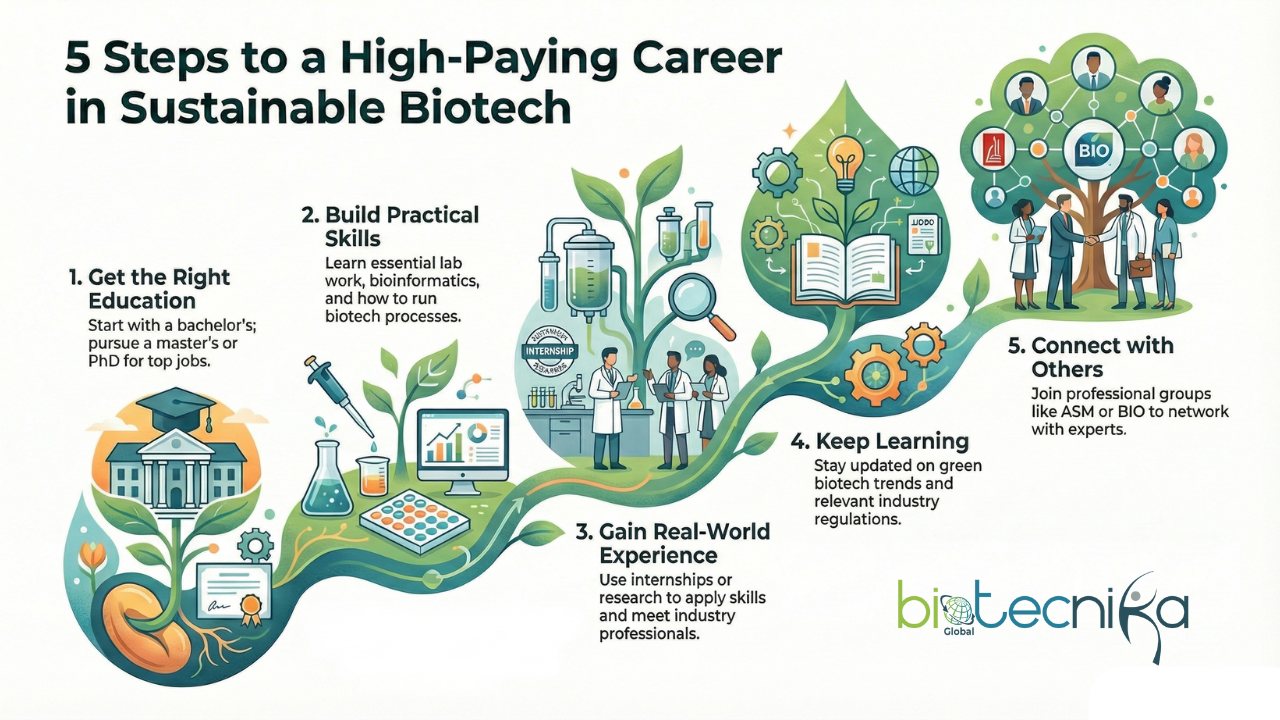
To build a successful and high-paying biotechnology career in this field of biotechnology, here are some tips for you:
- Get the right education: Start with a bachelor’s degree, and consider a master’s or PhD for top jobs.
- Build practical skills: Learn lab work, bioinformatics, and how to run biotech processes.
- Gain real-world experience: Do internships or research to practice your skills and meet people in the field.
- Keep learning: Stay updated on green biotech, environmental trends, and rules that affect the industry.
- Connect with others: Join professional groups like ASM or BIO to network and learn from experts.
Conclusion
Imagine looking back on your career and knowing that your work did not just advance science. It helped protect ecosystems, reduced pollution, and contributed to a better future. In the field of sustainable biotechnology, this is not just a possibility. It’s reality. By pursuing careers in this field, you can be part of innovations that genuinely make a difference.
The demand for skilled professionals is growing every day. With the right education, skills, and dedication, you can build a career that is both financially rewarding and environmentally meaningful.