
Drug Prices Rise Again in the US Despite Trump Pressure on Pharma
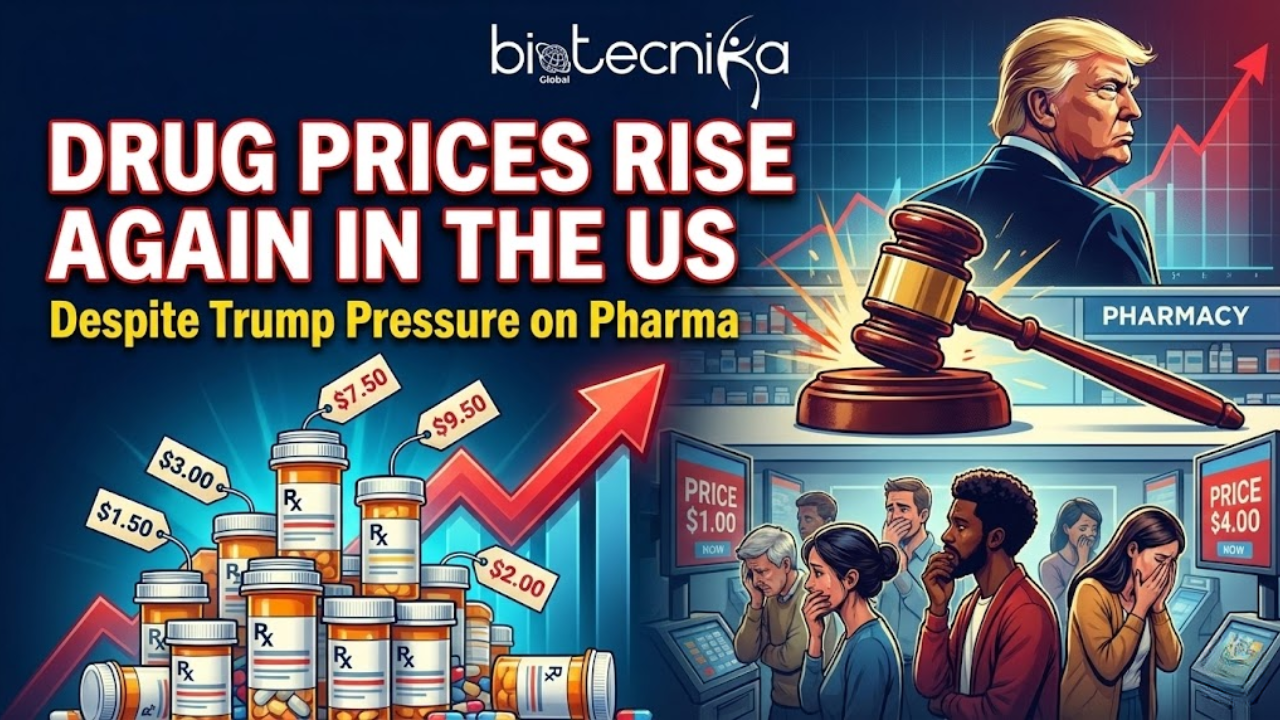
Every January, Americans brace for higher prescription costs. This year is no different. Despite all the political talk and regulations, drug prices are rising in the US.
As we began 2026, the US drugmakers have planned to raise list prices on atleast 350 branded medicines. This increase in prices will affect a wide range of drugs. From COVID-19, RSV, and Shingles vaccines to major cancer treatment like Pfizer’s Ibrance will be affected.
According to the experts, there will be 4% hike in the price. This is roughly the same as last year and much lower than the increases seen in the last few years. But still, for patients, employers, and insurers, that’s not the case. They are already struggling with the high healthcare costs, and just a smaller increase can burn their pockets.
When we look back, we can understand how we got here. Ten years ago, drugmakers were regularly raising prices by around 9% a year. That was changed after years of pressure from lawmakers, public anger over increasing drug prices, and new rules. Since 2019, most yearly increases have stayed in the 4% to 5% range, including the jump planned for January 2026.
But for the patients, this slower pace gives a little relief. As we know, many Americans are already paying the highest prescription drug prices in the world. It is often nearly three times more than what people across the globe are paying. Even a smaller price hike can have a high impact on the pharmacy counter.
Pressure from Washington Increases Anyway
What makes this year different from the past is the political situation. Under the US President Trump’s administration, drug companies are under significant pressure. The government wants them to lower the prices of medicines in the US to be closer to what people pay in other countries.
At the same time, the administration made pricing deals with 14 drug companies for some medicines sold through Medicaid and for people who pay cash.
Even so, five of the companies that agreed to those deals are planning to raise prices on January 1, 2026. Some of these companies are Pfizer, Sanofi, Boehringer Ingelheim, Novartis, and GSK.
Dr. Benjamin Rome, a health policy researcher at Brigham and Women’s Hospital, says these changes are being called “big transformations,” but in reality, they make only small differences. He explains that the system still favors higher prices. Drug companies often set one official price, secretly make deals with insurers, and then have a different price for people paying cash. This creates a mixed-up market where even if official prices go down, it doesn’t always save money for people buying medicine at the pharmacy.
Pfizer Leads the Pack
In the US pharmaceutical industry, no drugmaker is increasing the price like Pfizer in 2026. The list prices for about 80 drugs will be increased by the company.
Some of these drugs are cancer drug Ibrance, migraine pill Nurtec, COVID treatment Paxlovid, and hospital drugs like morphine and hydromorphone.
Most of the drug prices of Pfizer are under 10%. Its COVID vaccine Comirnaty will go up by 15%. These numbers do not tell the whole story. In the recent press release, the company stated that the average price for new medicines and vaccines is still below inflation. Pfizer also highlighted that there is a financial need for the research, new drug development, and expansion.
That explanation has become common across the drug industry. With the federal government now penalizing companies that raise Medicare drug prices faster than inflation, many drugmakers say they are simply trying to keep up with rising costs, not push prices higher than necessary.
Not All Prices are Going Up
There is one important twist in this tale. A small number of drug prices are actually going down.
Drugmakers plan to cut list prices on about nine medicines in 2026. The most dramatic example is Jardiance, the blockbuster diabetes drug sold by Boehringer Ingelheim and Eli Lilly. Its list price will drop by more than 40%, along with three related treatments.
The timing is no coincidence. Jardiance is one of the first Medicare drugs selected for government price negotiation, with a lower negotiated price set to take effect in 2026. Under that process, Boehringer and Lilly already agreed to slash the Medicare price by roughly two-thirds.
Neither company has publicly explained the broader list price cut. But the move highlights a new dynamic. When Medicare flexes its negotiating muscle, ripple effects can reach the commercial market.
Europe’s Giants Follow Suit
Even with slower increases, patients in the US are still paying far more for prescription drugs than people in other developed countries. That is nearly three times as much.
European drugmakers are following similar patterns. GSK, for example, plans to raise prices on about 20 drugs and vaccines, with increases ranging from 2% to nearly 9%. The company says the hikes are reasonable and necessary to support future scientific innovation. Sanofi and Novartis declined to comment.
A Calm but Steady January Tradition of Drug Prices
January has always been the month when biotech and pharma companies change prices the most. In 2026, it is happening again. We can expect more price increases and maybe some cuts in the months ahead. Right now, companies are finalizing their plans for the year.
Big double-digit price hikes seem to be over for now. Political pressure, Medicare negotiations, and rules against inflation have made companies more careful. But drug prices in the U.S. are still very high. Even small increases can add up fast for people who take several medicines.
The industry says it is trying to balance making medicine affordable with funding new research. Critics say the balance still favors shareholders too much. As Washington keeps a close watch and companies adjust their pricing, 2026 looks like another chapter in a long debate about how much Americans should pay for the medicine they need.