

The Coming Patent Cliff: Top 20 Drugs Losing Exclusivity 2026-2029
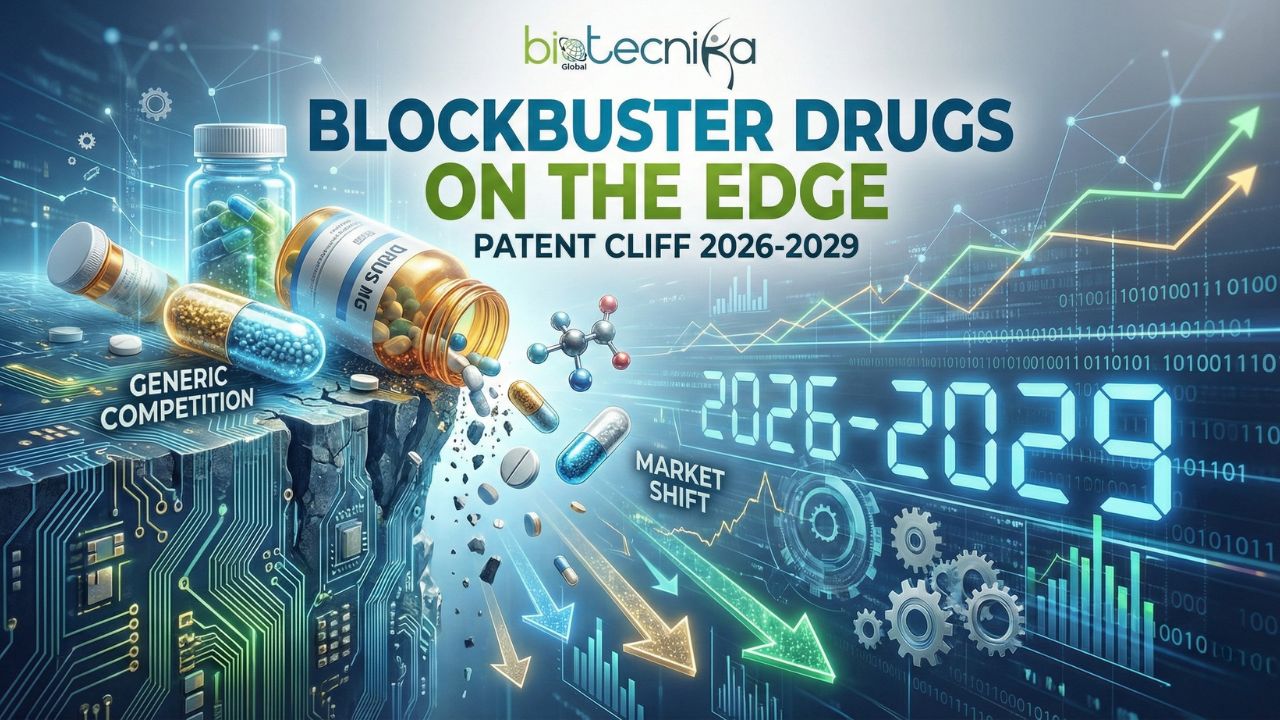
Stand on the precipice of a cliff. This very moment represents how the biopharma industry is poised to plunge if/when many of the most significant blockbuster drugs reach their term the patent cliff. The patent periods for significant drug therapies will end between 2026 and 2029 and could potentially eliminate $B of revenue with each passing year. For instance, last year, the top twenty-selling drugs generated 75% of all $236B of revenue that is considered to be lost.
What is the Patent Cliff?
The Patent Cliff is the huge fall in sales for a pharmaceutical product when its patent protection has expired. While the product is covered by a patent, the company has the only right to manufacture and distribute that product. When the patent expires, generics are available to be manufactured at a much lower cost, leading to a very steep decline in sales for the branded product.
The term was first used in the years 2009-2010 when products like Lipitor were losing their exclusive U.S. patent protection. Since then, the Patent Cliff has been a widely discussed topic in the biopharma industry. However, there has never been a time in history that the aforementioned patent cliffs has been so extensive; in fact, by 2030, blockbuster medications that are generating approximately $230 billion in revenue each year will be seeing their patent expiration come to an end.
Why the Patent Cliff Matters
For pharmaceutical companies, patents are more than legal protections, they are the foundation of their revenue. Losing Patent Protection can have serious consequences, including:
- Revenue Loss: Following patent expiration, sales for many high-revenue drugs can decline 50%-90% within the first twelve months.
- Investor Reaction: When patent expirations are announced by companies, investors will usually respond negatively, leading to stock price declines and company loss of market value.
- Pressure to Innovate: Pharmaceutical companies are compelled to create new products or acquire other companies that have developed new medicines in order to remain profitable and continue to increase revenues.
In anticipation of the impending patent cliff, a wave of mergers and acquisitions activity has commenced in order for companies to support their patent portfolios while also prepare for the impact of lost revenue(s). Examples include:
- Johnson & Johnson’s acquisition of $14.6 billion for Intra-Cellular Therapies to augment the Neurology pipeline;
- Merck & Co.’s purchase of Verona Pharma for $10 billion that adds other therapeutic products that treat cardiovascular/pulmonary disorders;
- Sanofi’s commitment to invest up to $9.5 Billion in Blueprint Medicines to strengthen the Immunological portfolio.
These transactions serve to demonstrate how pharmaceutical companies are seeking to offset the negative consequences resulting from the upcoming patent cliff through pipeline expansion and portfolio diversification.
Top Drugs Facing the Patent Cliff (2026–2029)
GEN has released the first-ever A-list of top 20 blockbuster drugs losing patent protection. Together, these drugs generated $176.4 billion in sales last year, showing how much revenue is at stake. Here’s a closer look:
- 2026:
- Januvia® (sitagliptin, Merck) – $2.255B
- Xeljanz® (tofacitinib, Pfizer) – $1.618B
- Janumet® & Janumet® XR (sitagliptin + metformin, Merck) – $1.433B
- 2027:
- Ibrance® (palbociclib, Pfizer) – $6.393B
- 2028:
- Enbrel® (etanercept, Amgen & Pfizer) – $5.386B
- 2029:
- Repatha® (evolocumab, Amgen) – $3.574B
- Genvoya® (elvitegravir + cobicistat + emtricitabine + tenofovir, Gilead) – $2.503B
Other drugs approaching their patent cliff include treatments for diabetes, cardiovascular diseases, cancer, and rare immunological diseases. The loss of exclusivity for these high-revenue drugs represents a significant shake-up for the biopharma industry.
How Companies Prepare for the Patent Cliff
Pharma companies use multiple strategies to reduce the impact of the patent cliff:
- Investing in New Drugs: Developing new medications with extended Patent Protection is essential. Some companies invest billions in R&D each year to bring innovative therapies to market.
- Mergers and Acquisitions: Buying smaller biotech companies allows pharma giants to acquire promising drugs and expand their patent portfolios.
- Targeting Niche Markets: Drugs for rare conditions or immunological diseases often face fewer competitors, allowing companies to maintain revenue even after other patents expire.
Line Extensions: Companies may modify existing drugs, such as changing delivery methods or combining them with other compounds, to extend exclusivity periods.
These strategies help balance the need for revenue with the pressures of patent expirations.
Effects on Patients and the Market
While the patent cliff poses challenges for pharmaceutical companies, it can be a positive development for patients. Once patents expire:
- Generics Become Available: Patients gain access to more affordable versions of high-cost drugs.
- Market Competition Increases: Generic manufacturers drive down prices, improving affordability and accessibility.
However, there is a trade-off. Reduced profits for original manufacturers can lead to less investment in research and development. This could slow innovation if companies are unable to fund new drug discoveries at the same pace.
Why the Patent Cliff is Bigger Now
The scale of the upcoming patent cliff is unprecedented for several reasons:
- High-Value Blockbusters: Drugs losing patents between 2026 and 2029 are some of the most profitable in history, collectively worth hundreds of billions.
- Global Market Pressure: With generics entering international markets, companies face competition not just in the U.S. but worldwide.
- Faster Innovation: As new treatments are developed rapidly, older drugs face quicker obsolescence, increasing the financial impact of patent expiration.
Future Developments
The biopharma industry faces one of its greatest challenges, which has become known as the “patent cliff” over the next few years. Companies that invest in their future through innovation, purchase of products with potential, and market targeting have the best chance of surviving this period. Patients, however, will see an increase in affordable drug choice as patents expire.
Paying attention to the patent cliff is important to everyone involved in the pharmaceutical industry: investors, healthcare practitioners, and policymakers alike. A thorough understanding of the patent cliff, the role of patent protection within the biopharma industry, and managing a company’s patent portfolios will assist in anticipating the changing face of pharmaceutical research and development.
Ultimately, the patent cliff (2026-2029) will prove to be a defining moment for the pharmaceutical landscape. The loss of exclusivity on blockbuster drugs is about to occur; this will lead to billions of dollars in lost revenue; the industry is under pressure to create new and improved products; and the timeframe of each company (including pharma companies and patients) will influence how healthcare evolves, and the availability of prescription medications in general.