

The Role of AI Automation in Advancing Biotechnology and Biology
AI in Biotechnology and Biology
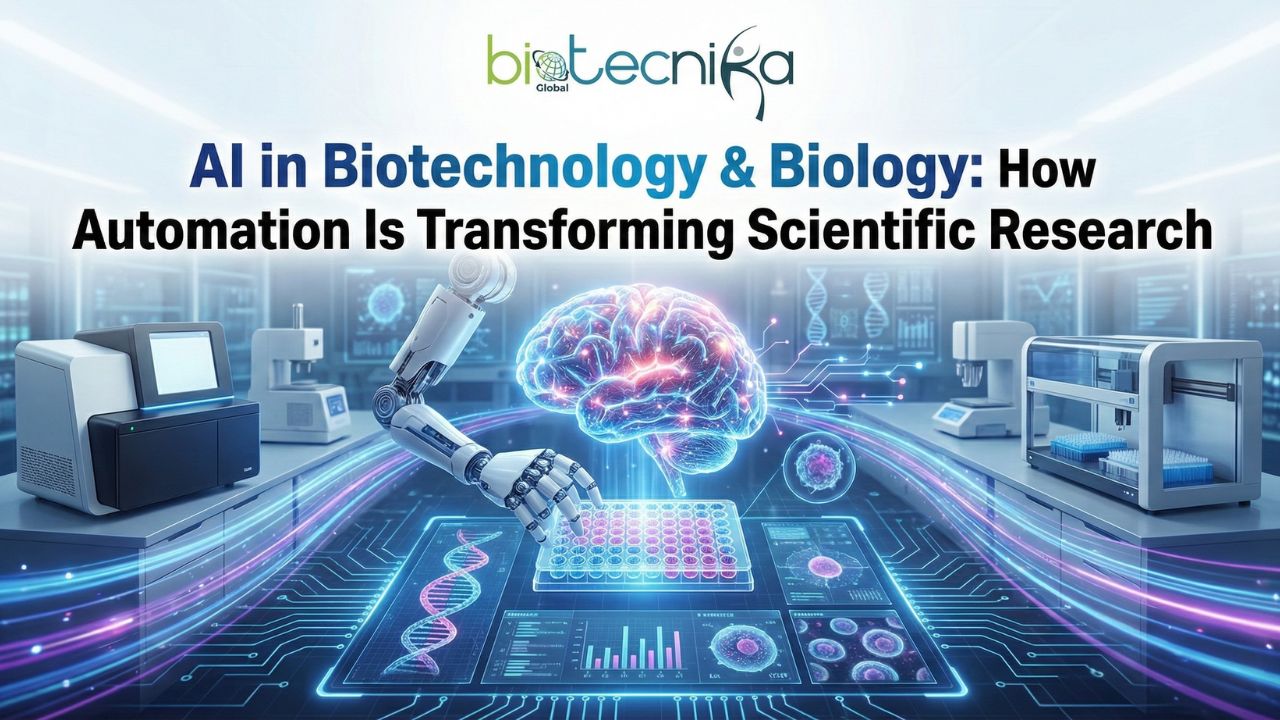
AI in the field of biotechnology involves using computers to support scientific research. Now, scientists can use AI to analyse large amounts of data. This makes it easy to find more patterns quickly. This allows them to predict more accurate results. This can replace the usual way of how research is done manually. In biology, AI can be used to study entities such as genes, proteins, and cells in greater detail than humans can. This makes the research reach a conclusion faster and more precisely.
AI in Drug Discovery
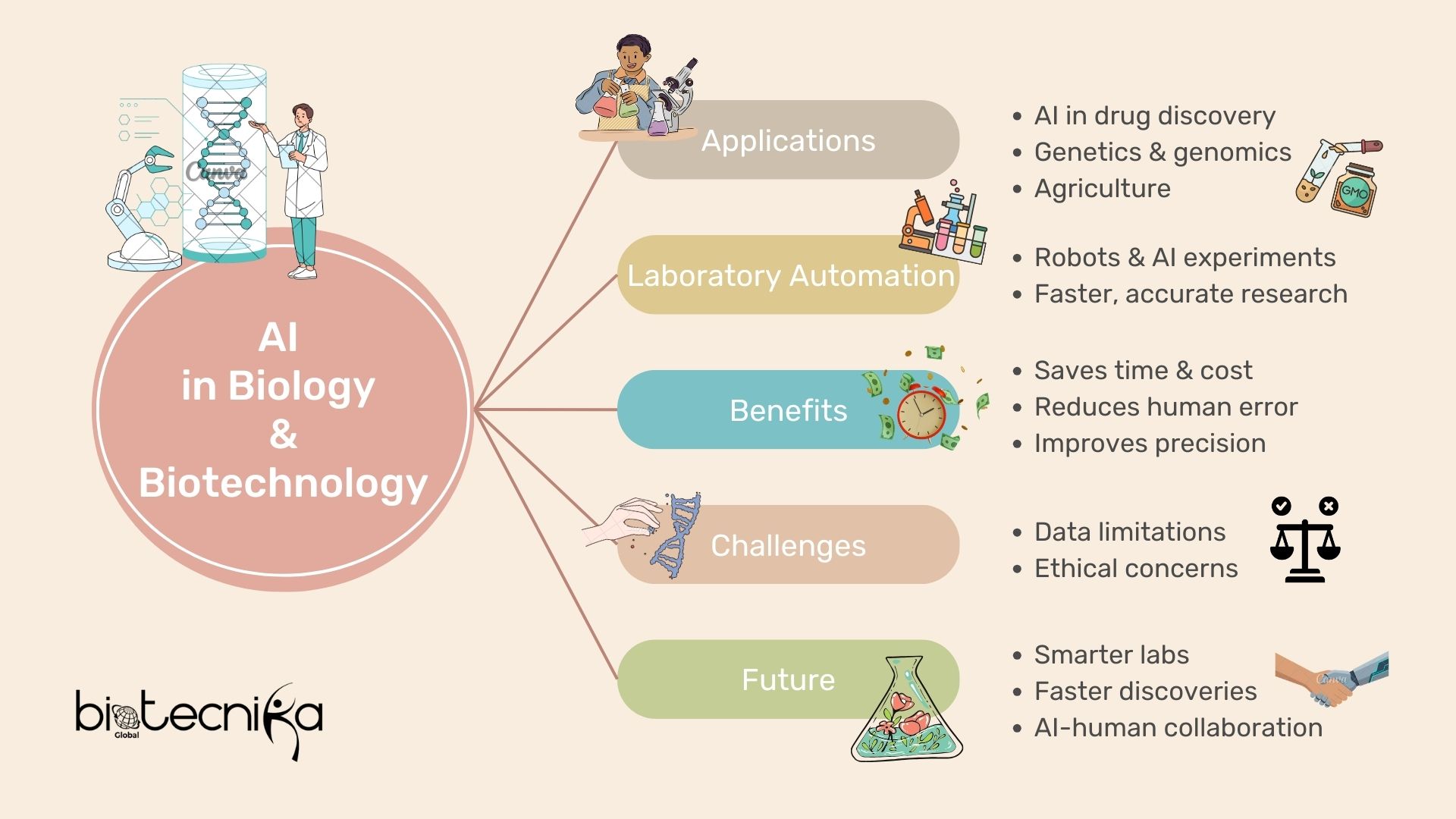
AI in biotechnology is very important because it helps in the discovery of new drugs. As we know, finding a new drug takes a very long time. The cost of producing a new drug is also very high. Now, with the help of AI, the discovery of new drugs can be much faster. Researchers are now able to study the chemical compound very quickly with the help of AI. It helps us to guess how molecules will react inside the body. Then the researchers can choose the most promising drug candidates. This means that the discovery of new medicines can be made more quickly. This will help the patients to get their treatment even faster. AI can also help in finding new ways to use the already existing drugs. This is considered to be a big help for medical research. This explains the role of AI in drug discovery.
How AI is Changing Laboratory Work
AI in biology is already changing a lot in how laboratory work is being done. AI-powered robots can perform the lab experiments automatically. This will reduce the human error made by the researchers and scientists. They can test thousands of samples and record them at once. They can even adjust the ongoing experiments in real time. This actually saves a lot of time and ensures that the experiments are more trustworthy. Scientists can now spend more time solving creative problems rather than sticking to repetitive tasks.
Applications in Genetics and Genomics
AI in biotechnology has a very important role in genetics and genomics. AI algorithms can quickly read and understand large amounts of genetic data within a few hours. This helps the scientists to understand diseases. And this makes it easy to predict the genetic disorders. This significantly helps the development of personalized medicine. With the use of AI in biology, researchers can identify gene mutations easily. With the help of AI, it is much easier to analyze large numbers of DNA sequences. The AI can provide trustworthy information in a very short span of time. Whereas, to complete the same task, scientists and researchers would take years to do it manually.
AI in Biotechnology for Agriculture
AI in biotechnology has the potential to change the way traditional agriculture operates. The soil, crops, and weather can be studied more easily when AI is integrated into agriculture. This can help farmers grow healthier food than before. The use of AI in Agriculture can predict plant diseases before they spread. The AI can suggest the best methods to improve the yield. This makes the food production more efficient and sustainable.
Challenges of AI in Biotechnology and Biology
Although AI is proving to be helpful in many of the different areas of biotechnology, more work is needed in AI. An issue is that AI requires large amounts of data to operate correctly, so if data is missing or incorrect, the results it produces may be inaccurate. In addition, AI does not replace the need for human decision-making; scientists still must have an adequate understanding of biological processes and must make critical decisions with assistance from AI-generated information. Finally, there are significant ethical considerations regarding privacy and data sharing, particularly in the fields of genetics and medicine, that should be addressed.
The Future of AI in Biology
The future of Artificial Intelligence in Biology holds great promise as technology continues to evolve; AI will have greater value and provide additional support for researchers. Fully automated laboratories and individualized medicine will soon become commonplace for all people. Drug discovery will happen at a pace that was previously unimaginable. The use of AI in biotechnology is creating opportunities for scientists to discover what was once thought impossible and further extend the boundaries of science.
Conclusion
AI is transforming pharmaceutical discovery methods by accelerating researchers’ timelines for developing drugs and improving their ability to quickly resolve complex issues encountered during their research. While many advantages of using AI exist, numerous barriers remain before AI can be considered ubiquitous in the fields of Biological Sciences and Biopharma. As AI continues to allow scientists in both Biotech and biosci to realize new opportunities for increased creativity and innovation, it will stimulate many future discoveries.