


Clinical Research Careers, Trials, and Global Opportunities
It was a breezy morning. You are in your college laboratory, staring at a petri dish. Although you love science, you didn’t want to spend your whole life hidden away in a basement laboratory. You want to see how medicine actually works and help people in the real world. You were asked to attend a guest lecture about how a new medicine went from a lab idea to a life-saving pill in a pharmacy. That was the moment you realized about Clinical Research.
The Science of today is the technology of tomorrow. But clinical research is the bridge that makes it safe for humanity. You might think that if you have a degree in biology, biotechnology, or pharmacy, your only options are teaching or lab work. But there is a massive world out there. That is Clinical Research. This is the field where science meets people.
In this article, we will look at clinical research careers, how clinical trials work, and how you can find clinical research jobs around the world.
What is meant by Clinical Research?
One must understand the work before talking about clinical research careers. Clinical research is the branch of healthcare science that determines whether new medicines, devices, or diagnostic products are safe and effective for humans.
From a simple headache pill to a complex cancer drug, every medicine you see in a shop has to go through years of laboratory testing. These tests are called clinical trials. This is strictly regulated and follows the Good Clinical Practice (GCP) guideline.
GMP (Good Manufacturing Practice) is the set of procedures that ensures medicines are consistently produced and controlled in accordance with quality standards. It is designed to minimize the risks in pharmaceutical production that cannot be eliminated by testing the final product.
The Four Stages of Clinical Trials
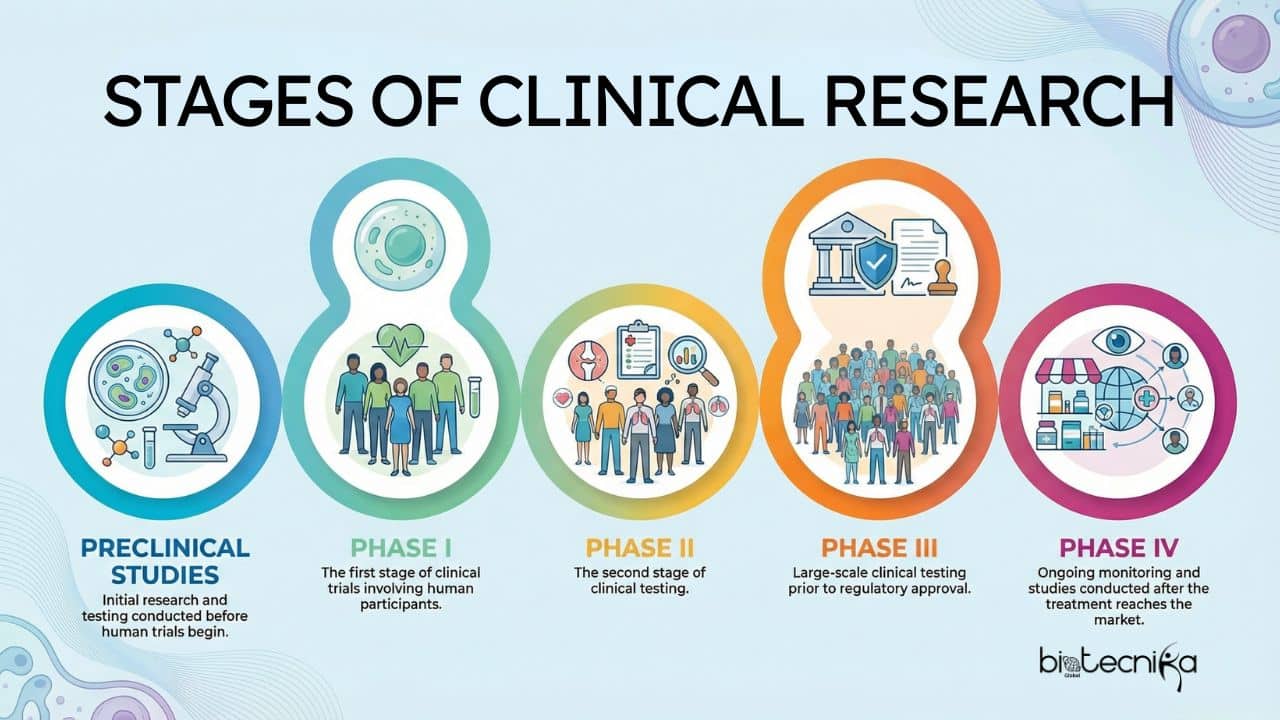
You should know how a trial moves from start to finish to get a job in this field. Clinical Trials happens in four main phases. They are,
- Preclinical studies: Testing occurs in a laboratory setting. Researchers use microorganisms or living lab animals such as mice, rats, or rabbits. They test for Toxicity (Is it poisonous?), Pharmacokinetics (What does the body do to the drug?), and Pharmacodynamics (What does the drug do to the body?)
- Phase I: Testing of a new drug with a small group of healthy people (20-100). This is done to identify the safety of the drug and the appropriate dosage.
- Phase II: Testing the new drug with a larger group of patients (100-300) with the disease. The researchers identify whether the drug works.
- Phase III: Testing on thousands of people in different countries of the world. This is used to confirm that the new drug is superior to existing drugs.
- Phase IV: Post-Marketing Surveillance. This occurs after the drug is dispensed at a pharmacy. Researchers continuously monitor for any long-term side effects.
Clinical Research Careers
There is no single type of job in clinical research. Depending on what you like, such as writing, talking to people, or working with data, there is an opportunity for you in this field. Some of the common Clinical Research Careers are,
1. Clinical Research Coordinator (CRC)
The Clinical Research Coordinator works at the hospital or clinic where the patients are present. They are the “boots on the ground.” They talk to the patients, give them the medicines, and document all the activities. It is a good entry-level role for life sciences graduates.
2. Clinical Research Associate (CRA)
The Clinical Research Associate is like an auditor. They travel to various hospitals and clinics to check the work of Clinical Research Coordinators. They make sure that everyone is following the rules and that the data provided is 100% accurate and honest. This is one of the most popular clinical research jobs because it often involves travel.
3. Clinical Data Manager (CDM)
This is for you if you love computers and puzzles. CDM manages a large dataset from clinical trials. They make sure that the numbers are clean and ready for scientists to analyze.
4. Pharmacovigilance (PV) Specialist
They entirely focus on safety. They track the drug’s side effects. The PV Specialists investigate why and how the side effects are caused.
Comparison of Top Career Paths
| Job Role | Main Work Location | Best Skill | Career Growth Potential |
|
CRA |
Travel / Remote |
Auditing & Observation |
Very High (Project Manager) |
|
CRC |
Hospital / Clinic |
People Skills |
High (Site Manager) |
|
CDM |
Office / Home |
Logic & Computer Skills |
Very High (Data Scientist) |
| PV Associate | Office | Medical Knowledge |
High (Safety Scientist) |
Emerging Roles in 2026
New Clinical Research Jobs are appearing that didn’t exist a few years ago. This is happening because there are many technological changes.
- Decentralized Trial (DCT) Specialist: They manage clinical trials in which patients participate from home via applications and wearable sensors.
- Clinical AI Consultant: Experts who help research companies use Artificial Intelligence to identify the right patients for a study in days rather than months.
- Medical Science Liaison (MSL): A high-level expert, typically with a Master’s or PhD. They consult top doctors on the science behind new drugs.
Global Job Opportunities and Salaries
The beauty of clinical research is that it is a global industry. A clinical trial might be designed in the USA, conducted in India and Brazil, and analyzed in Europe. This means Clinical Research jobs are available worldwide.
Salary Comparison by Region (Entry to Mid-Level)
|
Region |
Typical Entry Role | Average Annual Salary (USD) |
|
North America |
Clinical Research Coordinator |
$55,000 – $75,000 |
|
Europe (UK/Germany) |
Clinical Research Associate |
$50,000 – $70,000 |
|
India |
Junior Data Manager |
$5,000 – $10,000 |
| Australia | Clinical Research Associate |
$60,000 – $85,000 |
Note: Salaries may vary significantly by country, depending on experience and specialization.
Top global companies offering Clinical Research Jobs
Most clinical research jobs are found in two types of companies. They are Pharmaceutical companies (which develop drugs) and CROs (Contract Research Organizations), which are specialized companies hired to run clinical trials. Let’s look at where you can actually apply.
The following companies are the “Big Players”, offering the most clinical research careers worldwide in 2026.
1. Top Global CROs (The Service Providers)
Clinical Research Organizations are perfect for freshers. They work on several clinical trials simultaneously.
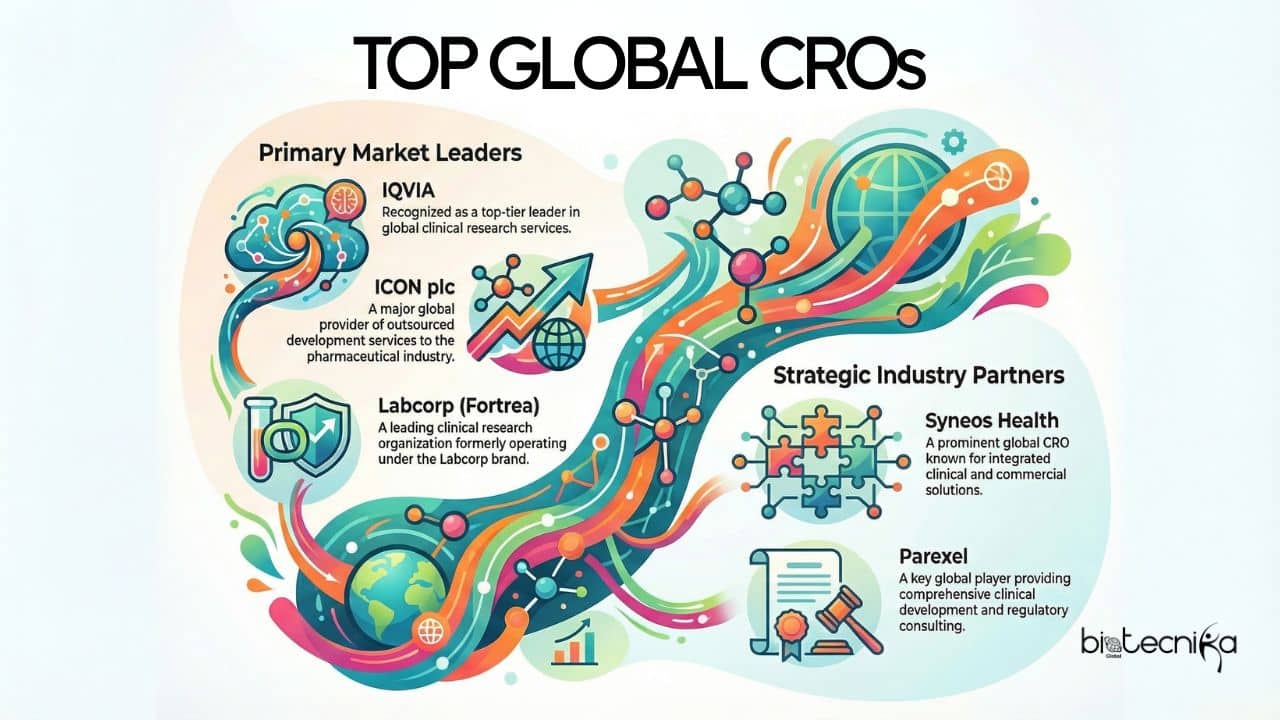
- IQVIA: World’s largest CRO. They use high-tech data and AI. They hire thousands of CRAs and Data Managers each year across more than 100 countries.
- ICON plc: Global giant headquartered in Ireland. They are known for their great training programs for “freshers”.
- Labcorp (Fortrea): They have a massive presence in the USA, Europe, and Asia. They handle everything from the very first lab test to the final human trial.
- Syneos Health: It helps both with the science (trials) and the business (selling the drug).
- Parexel: They are highly respected for their work in “Regulatory Affairs” and helping drugs get approved by the government.
2. Top Pharmaceutical Companies (The Inventors)
The “Big Pharma” companies are your cup of coffee if you prefer working for a single brand and focusing on its medicines. Some big Pharmaceutical companies around the world are given below,
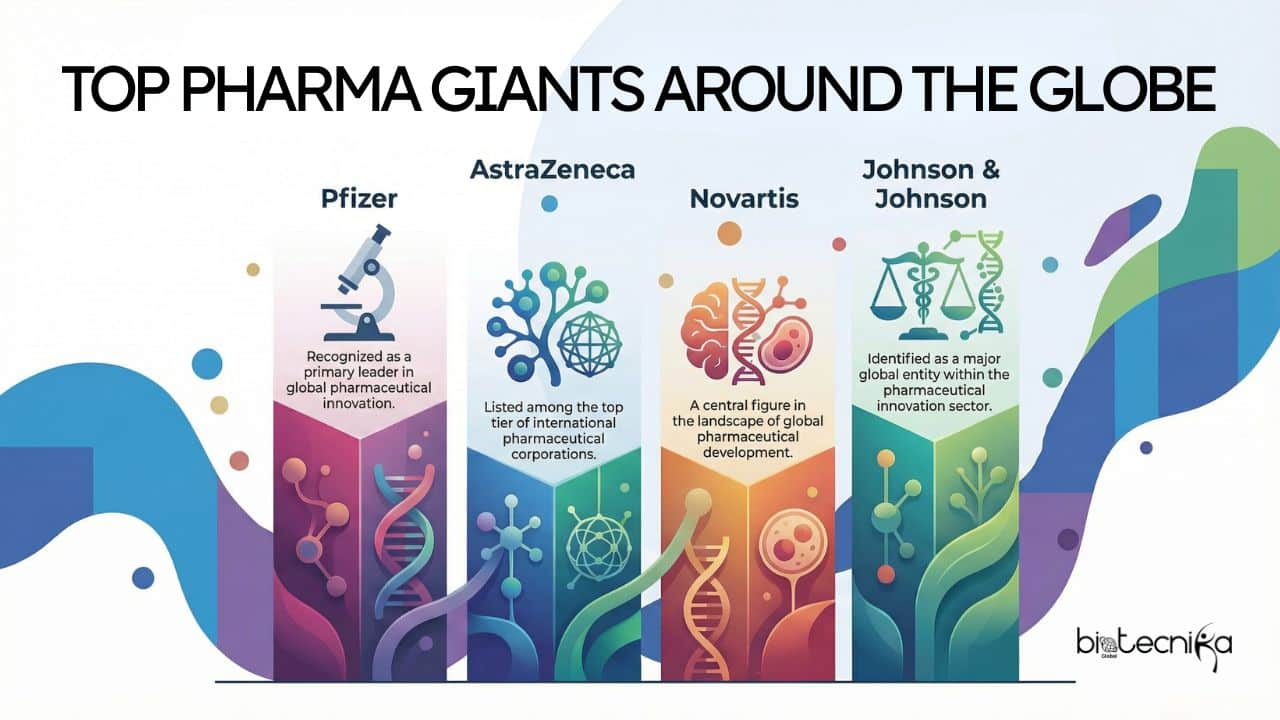
- Pfizer: Pfizer became a household name after COVID-19. They have huge clinical teams focused on vaccines and cancer research.
- AstraZeneca: A leader in oncology research and respiratory medicine. They have major hubs in the UK, USA, and Sweden.
- Novartis: It is known for its cutting-edge research, including gene therapy.
- Johnson & Johnson (J&J): It is working on everything from baby powder to advanced robotics and life-saving drugs.
Most of these companies now have “Talent Communities”. You can join their email list by visiting their website ( jobs.iqvia.com or careers.iconplc.com ) instead of waiting for a job to appear. Then the clinical research jobs are directly sent to your inbox based on your location and skills.
How to Start Your Career?
You don’t need a PhD to start your career in this field. All you need is proper planning. Most people follow this path to get their first job in clinical research:
- Get a Degree: A Bachelor’s degree in Life Sciences (Biology, Chemistry, Pharmacy, etc.) is the minimum required for starting a career in Clinical Research.
- Learn the Rules: Get a certificate in courses like Good Clinical Practice (GCP) and the Clinical Research Training. You can often find these courses online. Biotecnika offers a Clinical Research Training Program with 100% Placement Assistance. Reach out!
- Start Small: Look for “Clinical Trial Assistant” or “Junior Coordinator” roles.
- Network: Connect with professionals on LinkedIn who already work in clinical research.
Skills You Will Need
|
Skill Type |
Examples |
| Technical |
Knowledge of GCP, Medical Terminology, and Data Entry |
| Soft Skills |
Attention to detail, Communication, Ethics, Time Management |
The Future of Clinical Research (2026 and Beyond)
The world of clinical research is changing fast. There are more “Decentralized Trials.” This means patients can participate in clinical trials from home via wearable devices and video calls, instead of traveling to the hospital each week.
Also, AI is now used to identify the right patients for clinical trials. This gives faster and better results than a human could. This makes the industry more efficient and creates new clinical research job roles for people who understand both biology and technology.
Conclusion
A career in this field is not just a job. It is a way to help bring life-saving cures to the world. Clinical Research Careers offer stability, good pay, and a sense of purpose. Whether you are interested in the travel life of a CRA or the data-driven world of a CDM, there is a good scope in this field.
The world needs more scientists who care about people. Are you ready to step out of the lab and into the future of medicine?