


Why Environmental, Bio, and Climate Ethics Matter Today
The Earth encompasses the environment in which we all reside, but at the same time is facing countless issues throughout each and every region in the world, including Climate Change, Pollution and Natural Resource Mismanagement, all of which are having an impact on the Earth and its inhabitants. To deal with these issues, we must adopt a new ethical perspective regarding our relationship to and with Nature through Environmental Ethics, Bioethics and Climate Ethics. In this article we will define all three Ethical Domains (Environmental Ethic, Bioethics and Climate Ethics), and demonstrate the importance of understanding each Ethical Domain in relationship to preserving Ecosystems and Ecological Systems as well as maintaining Biodiversity.
Understanding Environmental Ethics
Environmental ethics refers to the moral principles and values underpinning how we ought to treat the earth’s environment (i.e., to preserve and conserve, and sustain the earth’s natural environment and resources) and thereby provides us with an understanding of how to act toward these ecosystems.
Through environmental ethics, we learn about ourselves as caretakers rather than owners of these ecosystems. This understanding leads us to value the natural world and recognize that the destruction and/or manipulation of these ecosystems will have irreversible effects on our lives and society. Thus, we can maintain the health and balance of our ecological systems when we utilize and manage our resources responsibly and protect our remaining natural habitats and species.
Understanding Bioethics
Bioethics deals with moral dilemmas arising from a person’s health and/or wellness, or the health effects created by science (e.g., Drugs). This area of study addresses bioengineering and also deals directly with the functions of Life Sciences through Medicine, Biology and the developing technologies found in the field of biotechnology. Examples of important questions answered in bioethics include how to conduct experiments with human beings; how to give humane treatment to animal subjects, and how to correctly handle biomedical waste.
The link with nature is also significant. The impact of humans on our Earth is evident, and the use of Bioethics will help to promote respect for our environment as well as an individual’s right to live free from harm. Bioethics reminds us that not only is it important to understand the scientific process, but also to ensure that human life and the environment remain safe for all living things. Supporting bioethics allows us to create safe and healthy communities for both humans and animals.
Understanding Climate Ethics
Climate Ethics has to do with moral obligations related to environmental issues arising from climate change. The primary focus is on issues such as fairness and social justice. Climate change impacts the natural environment in multiple ways, including through rising ocean temperatures and precipitation, causing disturbances within various biological and/ or ecological systems and putting the natural world and humankind at risk.
What Climate Change Ethics teaches us is that those who contribute to greater amounts of pollution should accept a greater burden of responsibility. Furthermore, Climate Change Ethics highlights the importance of caring for future generations. People can follow Climate Change Ethics by reducing their carbon footprint and adopting renewable forms of energy, thereby reducing their impact on the world’s ecosystems.
Why All Three Ethics Are Equally Important
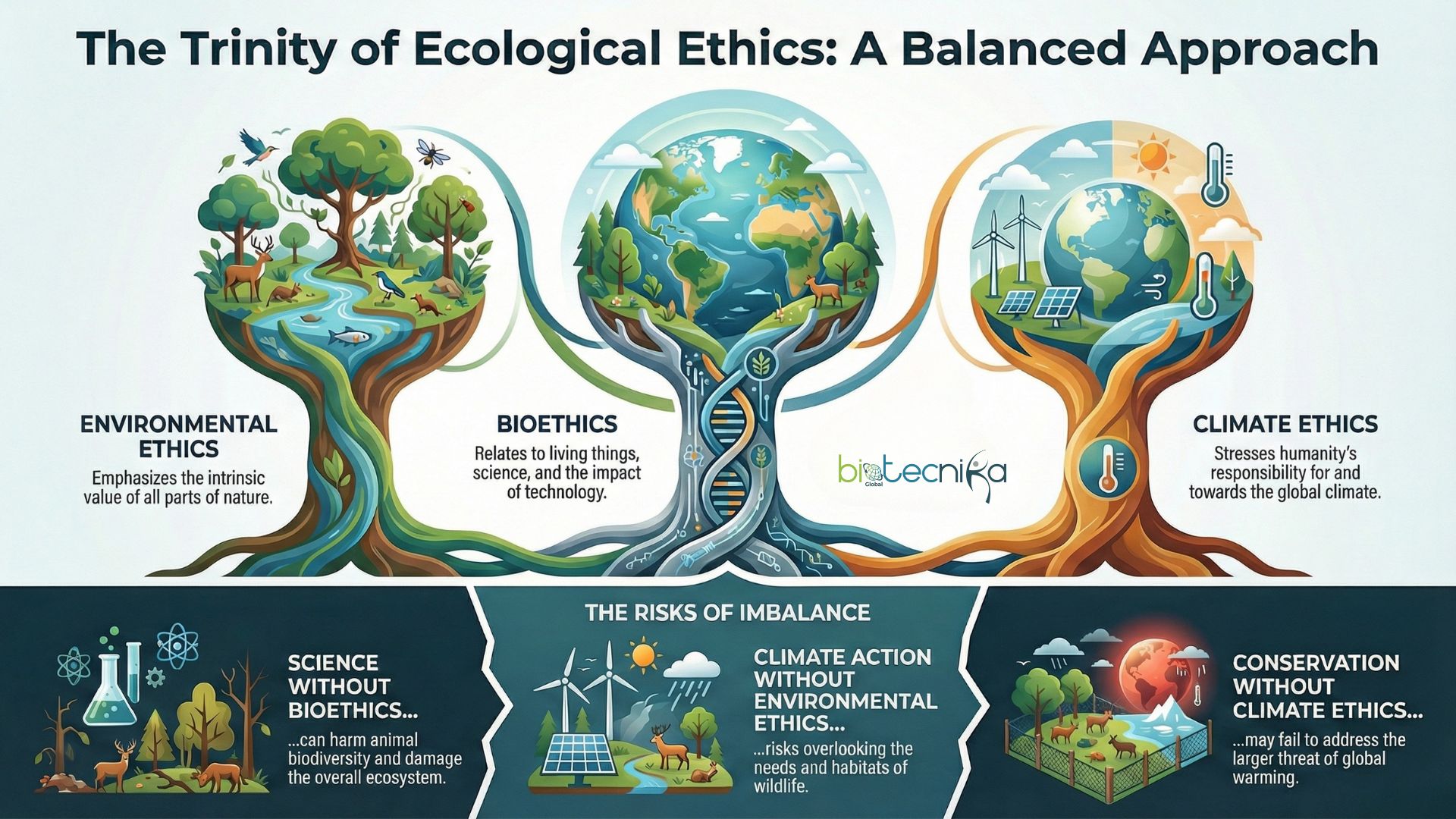
Environmental Ethics, Bioethics, and Climate Ethics work together. The interdependence between Environmental Ethics, Bioethics, and Climate Ethics is vital in ensuring the future of life on Earth. While Environmental Ethics emphasizes all of nature, Bioethics relates more directly to living things as well as science and technology. Meanwhile, Climate Ethics stresses humanity’s responsibility towards the climate.
If any one of these ethical frameworks is not applied, it can negatively affect ecosystems and ecological health. For instance, research carried out from a strictly scientific standpoint without giving credit to bioethics may cause harm to both the biodiversity of the animal kingdom and the overall ecosystem.
Climate action that is carried out without considering environmental ethics risks missing out on considering wildlife’s needs. Conversely, environmental protection that fails to account for climate ethics risks failing to fully address global warming. Therefore, it is necessary that all three ethical perspectives remain in balance.
Simple Comparison
| Ethics Type | Main Focus | How It Protects Nature |
| Environmental Ethics | Moral duty toward nature | Protects ecosystems and ecological systems |
| Bioethics | Ethics in life sciences and medicine | Prevents harm to life and environment |
| Climate Ethics | Responsibility for climate change | Reduces damage to ecosystems |
This table shows how each ethical area plays a unique but equal role.
Role of Ethics in Protecting Ecosystems
Ecosystems depend on balance. Environmental Ethics helps protect forests, oceans, and wildlife. Bioethics ensures that scientific and medical activities do not harm these ecosystems. Climate Ethics addresses climate-related threats that disturb ecological systems.
Together, they guide humans to act responsibly. Protecting ecosystems means protecting food, water, and air for everyone.
Environmental Ethics, Bio Ethics & Climate Ethics in Daily Life
These ethical ideas are not only for experts. Environmental Ethics can be practiced by saving water and reducing waste. Bioethics can be followed by respecting life and supporting ethical science. Climate Ethics can be practiced by saving energy and using public transport.
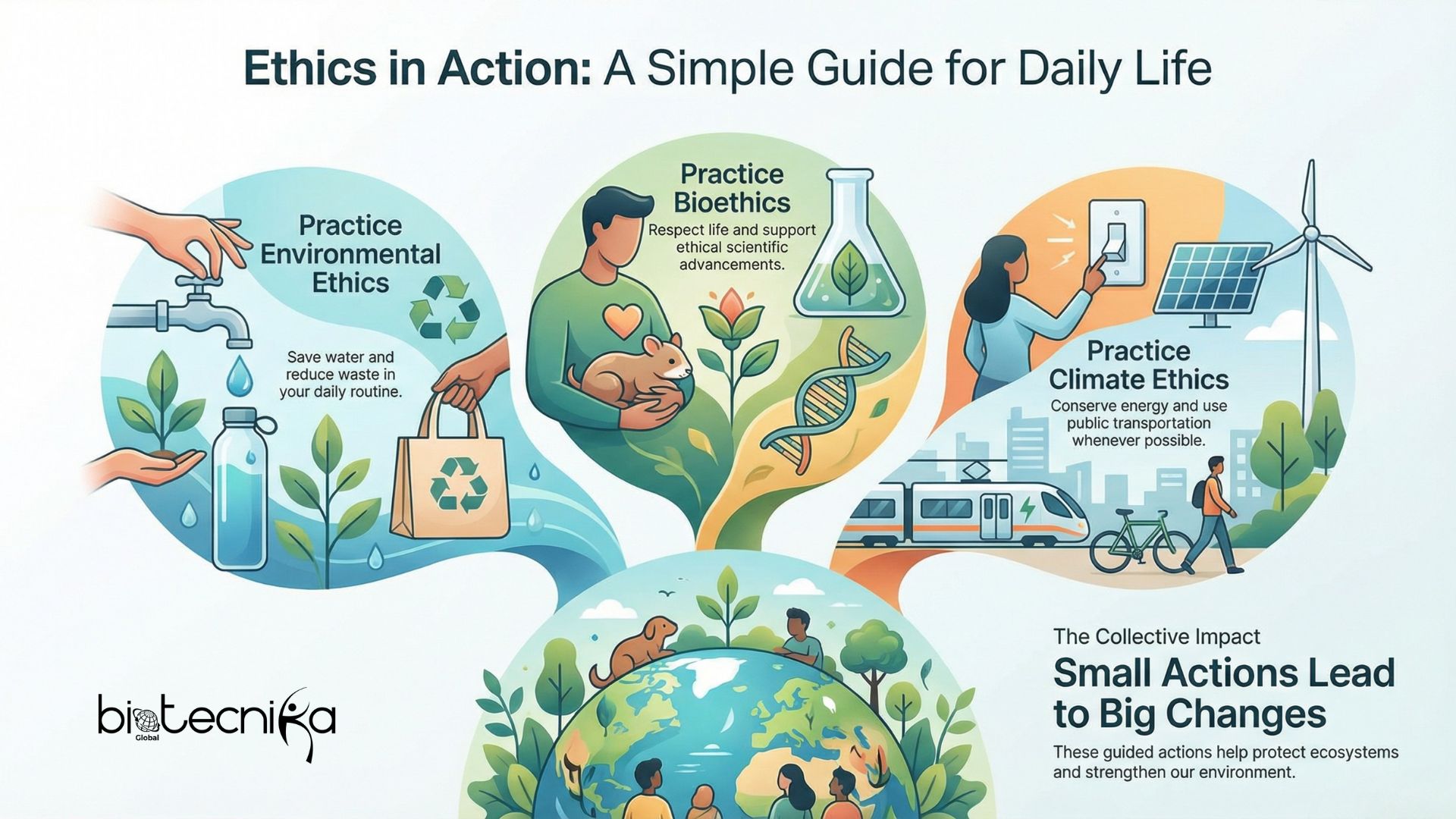
Small actions guided by these values help protect ecosystems and strengthen ecological systems.
Education and Awareness
Education helps people understand Environmental Ethics, Bioethics, and Climate Ethics from an early age. Schools and communities can teach respect for nature, responsible science, and climate responsibility.
When people understand these ideas, they make better choices that protect ecosystems and reduce harm to ecological systems.
The Way Forward
Ethical thinking will determine whether Earth survives. Governments, scientists, and individuals all follow Environmental Ethics, Bioethics, and Climate Ethics to improve the future of the planet. Although the law is important, value is even more important.
Humans need to respect ecosystems, act responsibly as scientists, and treat climate change fairly in order to protect ecological systems and provide healthy living conditions for future generations of humans.
Conclusion
In conclusion, Environmental Ethics, Bioethics, and Climate Ethics show us how we can be responsible individuals of Earth. All three types of ethics are equally important to the protection of ecosystems and ecological systems. By respecting nature, valuing life, and taking climate change seriously, we make progress toward a more secure and sustainable future.



Veryvery useful and career oriented 🙏