


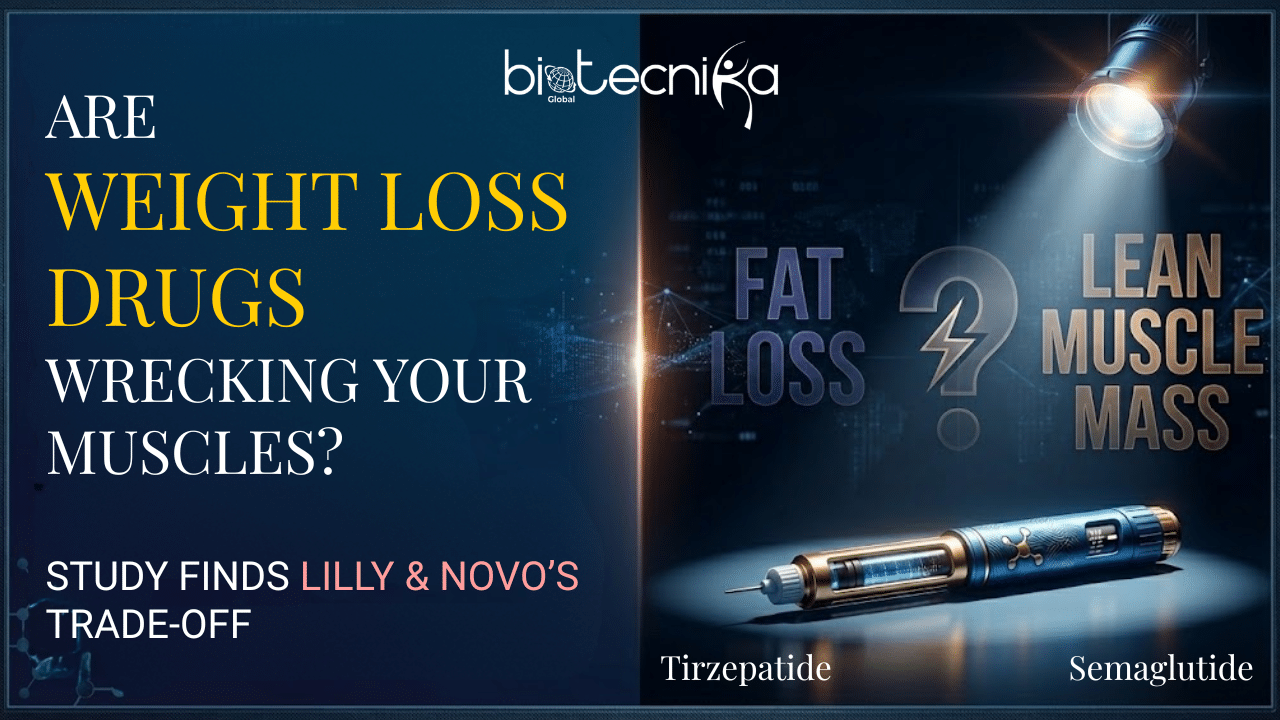
Lilly and Novo Weight Loss Drugs Are Wrecking Your Muscles: Watch Out
An analysis released this past week continues to raise critical questions about how common obesity medications or Weight Loss Drugs like Tirzepatide (Mounjaro) and Semaglutide (Wegovy) may affect an individual’s overall health, particularly the health of their muscles. Understanding the long-term effects of a person’s muscle mass on their wellness is extremely important, yet many people do not consider this when they lose weight.
Obesity & Weight Loss Drugs and Outcomes
Tirzepatide and Semaglutide have improved how physicians treat obesity by providing patients with significant weight loss and other positive health benefits, including improved heart health. However, new evidence suggests that different types of weight-loss medications may affect muscle differently.
So, do weight loss medications lead to higher body fat percentages?
According to a recent analysis (from nference) of approximately 1,800 patients taking Tirzepatide compared to over 6,200 patients taking Semaglutide, “Patients taking Tirzepatide lost 1.1% more of their lean body mass than patients taking Semaglutide after three months, and 2% more after twelve months of continued use.”
This is a major finding, as growing evidence shows that weight-loss medications effective for body fat loss may also result in loss of lean body mass. Lean body mass is needed for metabolism and strength, both of which contribute to a person’s overall long-term wellness.
Loss of Muscle Has Importance
Aristotle would suggest that people pay attention to lean mass (body) as it pertains to exercise and metabolism; therefore, losing muscle (lean) due to weight-loss drugs could affect your ability to exercise and how quickly you recover after exercise.
“Patients need to look at drugs differently than just by the total amount of weight they can lose,” says Dr. Venky Soundararajan (lead Researcher). “What kind of weight (loss) matters?”
The Mechanism
Tirzepatide and Semaglutide both function similarly through the mimicking of hormones (regulate appetite) and digestion; however, they differ in that Tirzepatide mimics both GLP-1 and GIP hormones, while Semaglutide mimics only GLP-1 hormones. Both will increase how long you feel full and how much less you eat, thereby making weight loss drugs successful; however, both have the potential for muscle loss, especially when you decrease caloric intake rapidly.
It should be noted that no biological rationale has been identified for the difference in muscle loss between patients taking Tirzepatide and those taking Semaglutide.
A Vicious Cycle of Muscle Loss
The Research also found that decreased exercise tolerance was associated with greater muscle loss among patients using weight-loss drugs, especially Tirzepatide. Individuals with pre-existing musculoskeletal conditions were at even greater risk.
Higher doses, longer treatment duration, and limited physical activity further increased the likelihood of losing lean body mass.
“It becomes a cycle,” Researchers stated. “Reduced muscle leads to lower physical activity, which in turn accelerates muscle loss.”
Industry Response
A spokesperson for Novo Nordisk stated that Clinical Trials of Semaglutide did not show significant differences in muscle mass compared to placebo, and that physical function remained stable.
Meanwhile, Eli Lilly emphasized that some muscle loss is expected during any weight reduction process, including lifestyle-based approaches.
What This Means for Patients
As weight loss drugs continue to gain popularity worldwide, experts stress the importance of a balanced approach. Incorporating resistance training, adequate protein intake, and Medical supervision may help preserve muscle mass while benefiting from these treatments.
The Research findings, published ahead of peer review, underscore the need for more Research into how weight loss drugs affect body composition, not just the number on the scale.