
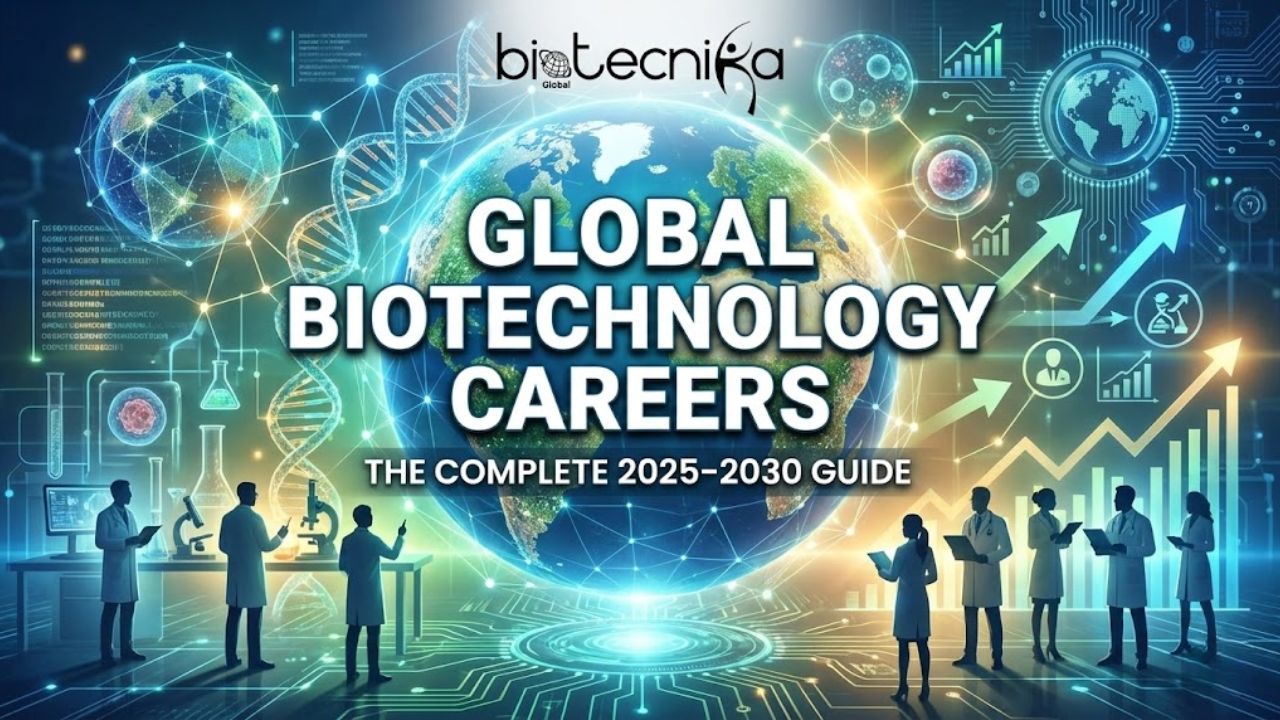
Biotechnology Careers
Imagine that it’s a morning in 2028. You are not in an office cubicle, but you are in a biotech foundation in Boston. On your desktop screen, there is a digital twin of a human heart. You are testing how gene modifications interact with cardiac cells without even touching a patient. Down the hall, your colleague is brewing leather from mushroom roots for a global fashion brand. In the cafeteria, the burger on your plate was grown from cells and not cattle. Have you ever wondered whether all these would have happened because of you and your Biotechnology career? You are not just a scientist; you become an architect of life.
The world is rapidly changing. We are shifting from the Information Age to the Biologic Age. If you are looking for a career with purpose, profit, and planetary impact, the biotechnology sector is the best fit for you.
This article is not just about knowing biotechnology; it is about finding your place in the revolution that will shape the next decade.
The Pulse of Global Biotechnology (2025–2030)
Beyond Lab coats and Petriplates, the Scope of Biotechnology has exploded. The global bio-economy is projected to reach over $4 trillion by 2030. Let’s break down what this actually means.
Biotechnology was almost exclusively about the manufacturing of drugs and medicines in the past. But today, Global Biotechnology careers are rewriting the code of the physical world.
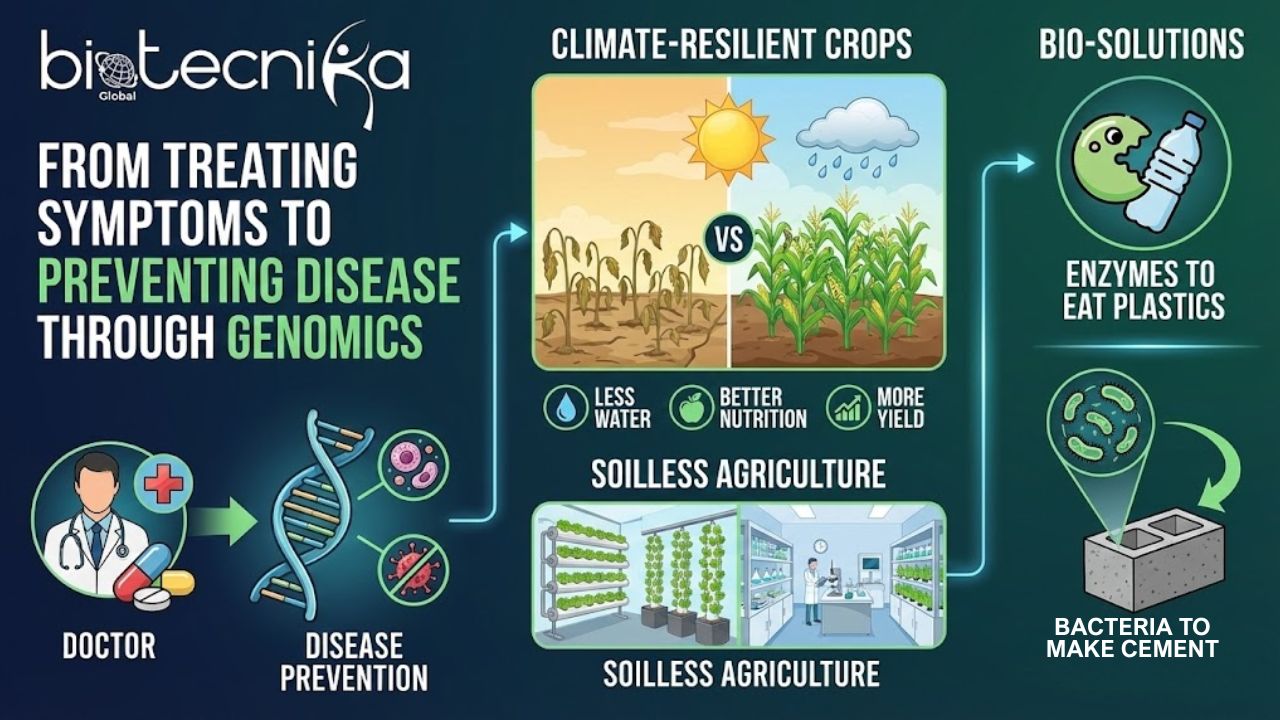
We are moving from treating the symptoms to preventing diseases through Genomics. We are genetically modifying the crops to be climate-resilient, require less water, provide better nutrition, and yield more. We are also using enzymes to eat plastics and bacteria to make cement. The farming methods are shifting from field agriculture to Soilless Agriculture. AI Tools and Technologies are being used by several biotech companies and institutes to simplify workflows. Wondering what else could be possible, the magic of Biotechnology!
Why the 2025–2030 Window Matters?
This five-year timeframe is going to be pivotal. For the first time, we are seeing the “convergence” of biology with Artificial Intelligence. AI is allowing us to read and write DNA at a speed never seen in the past. Come into this field now, and you are surfing the biggest wave since the internet boom of the late 90s.
Top Biotech Innovations Shaping Your Career
You must understand the technology before knowing where the Biotech jobs are. Innovations in the biotech industry are creating new job titles that didn’t even exist five years ago.
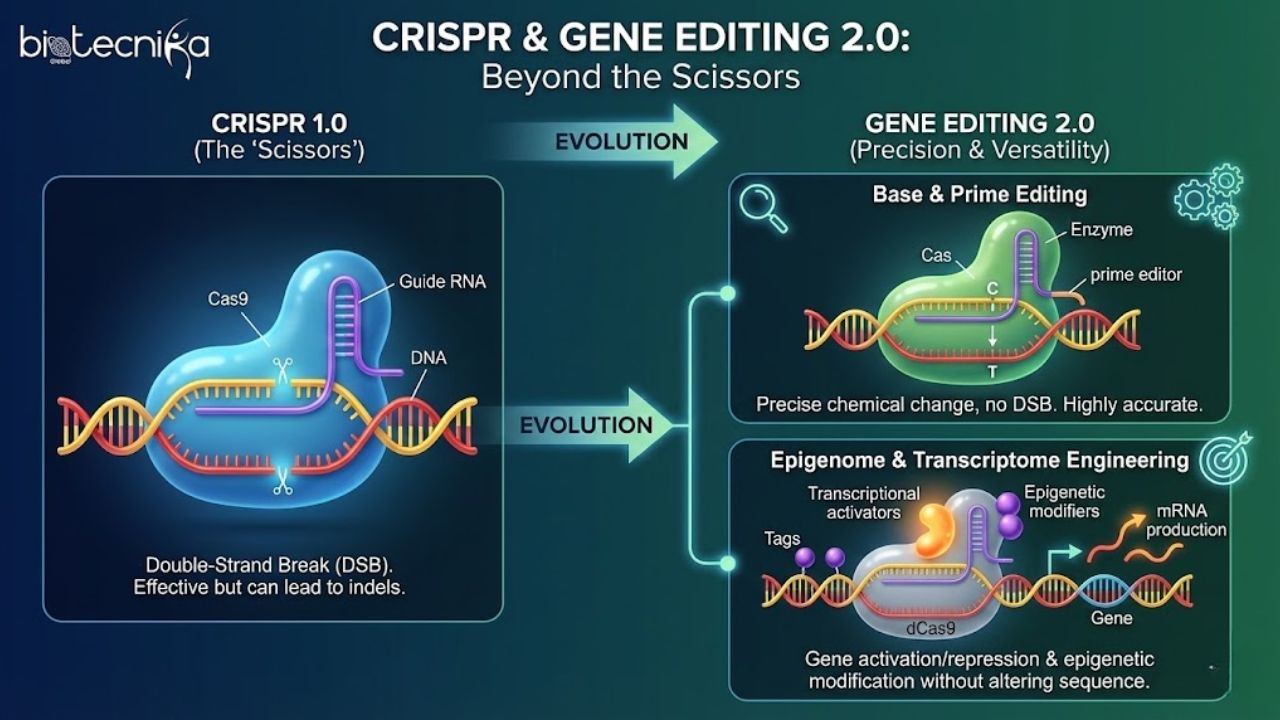
A. CRISPR and Gene Editing 2.0
We have moved from simple cutting and pasting of genes using CRISPR to base editing the genes. Base editing is the process of rewriting single letters of DNA to cure genetic disorders like Sickle Cell Anaemia.
- Job Opportunity: Genome Engineer, CRISPR Technician.
B. Synthetic Biology (SynBio)
Think of Synthetic Biology as “Lego for Biology.” Researchers are creating new biological circuits to make cells do things they wouldn’t even do in nature. Yeast can produce the Vanila flavor and Bacteria can sense pollution.
- Job Opportunity: Synthetic Biologist, Fermentation Scientist.
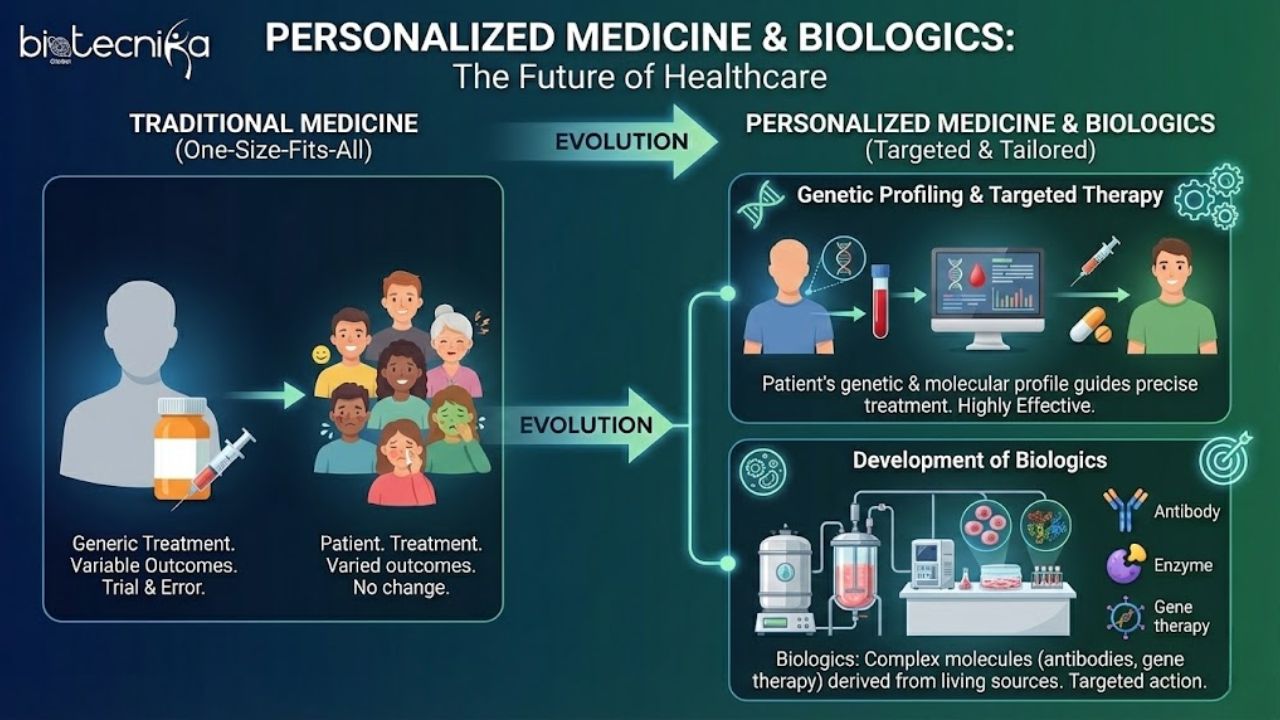
C. Personalized Medicine & Biologics
Normal Medicines are used by everyone for any infection or some chronic diseases. But now personalized drugs are being made based on the genetic profile of a particular patient to give a cure for them. This method requires a massive data analysis. AI & ML are helping them in a better way.
- Job Opportunity: Bioinformatics Scientist, Clinical Data Manager.
D. Sustainable Biomanufacturing
Biotechnology is the answer if the world wants oil. Sugars and nutrient-rich agricultural wastes are being used by the industries for the production of bioplastics, biofuels, and biotextiles.
- Job Opportunity: Bioprocess Engineer, Sustainability Consultant.
E. AI-Driven Drug Discovery
Previously, new drug discovery needed more trial and error experiments that took years. But now, it is made easier by Artificial Intelligence. AI predicts molecules that will work even before researchers step into the laboratory. It is like having a supercomputer that simulates billions of chemical reactions in seconds to find a cure faster.
- Job Opportunity: AI Drug Discovery Scientist, Computational Chemist.
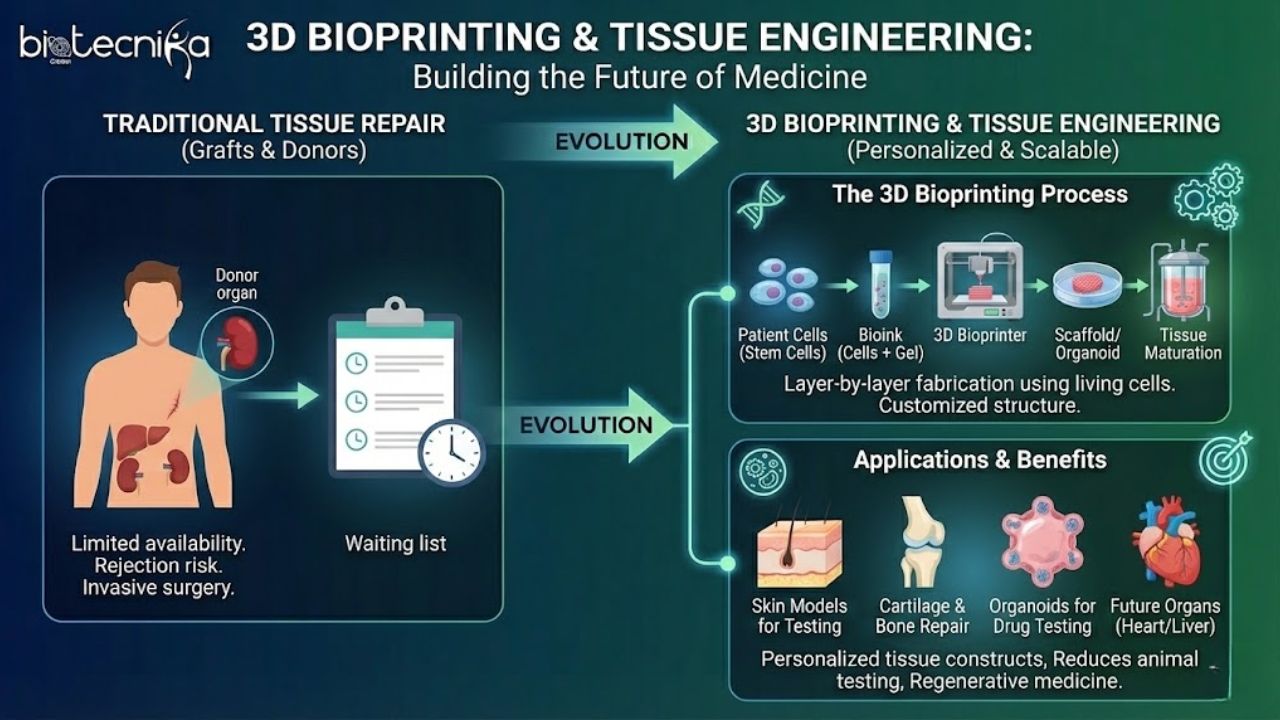
F. 3D Bioprinting & Tissue Engineering
Imagine a printer that uses bio-ink made of living cells instead of plastic. Researchers are printing skin for burns and working toward printing functional organs such as kidneys and hearts. This ends the transplant waiting lists.
- Job Opportunity: Bio-ink Formulator, Tissue Engineer.
G. Microbiome Therapeutics
Scientists are discovering trillions of bacterial species in our gut. They are responsible for controlling everything, right from our digestion to our mental health. Several beneficial bacteria are engineered to treat depression, diabetes, and cancer.
- Job Opportunity: Microbiome Analyst, Live Biotherapeutic Developer.
H. Cellular Agriculture (Future Food)
Cellular Agriculture is the technology behind “lab-grown meat.” Small cell samples from animals can grow into steaks and burger patties in clean facilities without raising or slaughtering animals. It is the future of ethical eating.
- Job Opportunity: Cell Culture Media Specialist, Food Tissue Engineer.
The Biotechnology Career Map: Roles, Skills, and Salaries
When people think of Careers in Biotechnology, they usually think of a person holding a pipette. That’s only 20% of the industry. The other 80% is data, business, regulation, and engineering.
Here is the breakdown of the hottest roles for 2025–2030.
- The “Wet Lab” Warriors (R&D)
These are the hands-on scientists making discoveries.
-
Role: Research Scientist (Immunology/Genomics)
-
What they do: Design experiments to find new drug targets or improve crop resilience.
-
Skillset: Molecular biology, cell culture, patience, critical thinking.
-
Salary Trend: $90,000 – $140,000 (Global Average).
-
-
Role: Bioprocess Engineer
-
What they do: They take a tiny discovery in a test tube and figure out how to manufacture it by the ton. They design the giant tanks (bioreactors) that grow cells.
-
Skillset: Chemical engineering, fluid dynamics, GMP (Good Manufacturing Practice).
-
Salary Trend: $85,000 – $130,000.
-
- The “Dry Lab” Data Wizards
Biology is now a data science problem. This is the fastest-growing segment in the biotechnology sector.
-
Role: Bioinformatics Specialist
-
What they do: Use code to analyze terabytes of genetic data. They find the “needle in the haystack” that leads to a new cure.
-
Skillset: Python, R, SQL, Machine Learning, biological knowledge.
-
Salary Trend: $100,000 – $160,000 (High demand!).
-
-
Role: Computational Biologist
-
What they do: Build computer models to simulate how biological systems work, saving years of lab time.
-
Skillset: AI modeling, structural biology, algorithm design.
-
Salary Trend: $110,000 – $175,000.
-
- The Bridge Builders (Business & Regulation)
Science is useless if it doesn’t reach the market. These roles bridge the gap between the lab bench and the real world.
-
-
Role: Regulatory Affairs Specialist
-
What they do: The “diplomats” of biotech. They deal with government agencies (like the FDA or EMA) to get products approved.
-
Skillset: Legal knowledge, writing, attention to detail, negotiation.
-
Salary Trend: $95,000 – $150,000.
-
-
Role: Biotech Product Manager
-
What they do: Decide what products the company should build based on market needs. They speak both “science” and “business.”
-
Skillset: MBA or business acumen, communication, market research.
-
Salary Trend: $120,000 – $180,000.
-
-
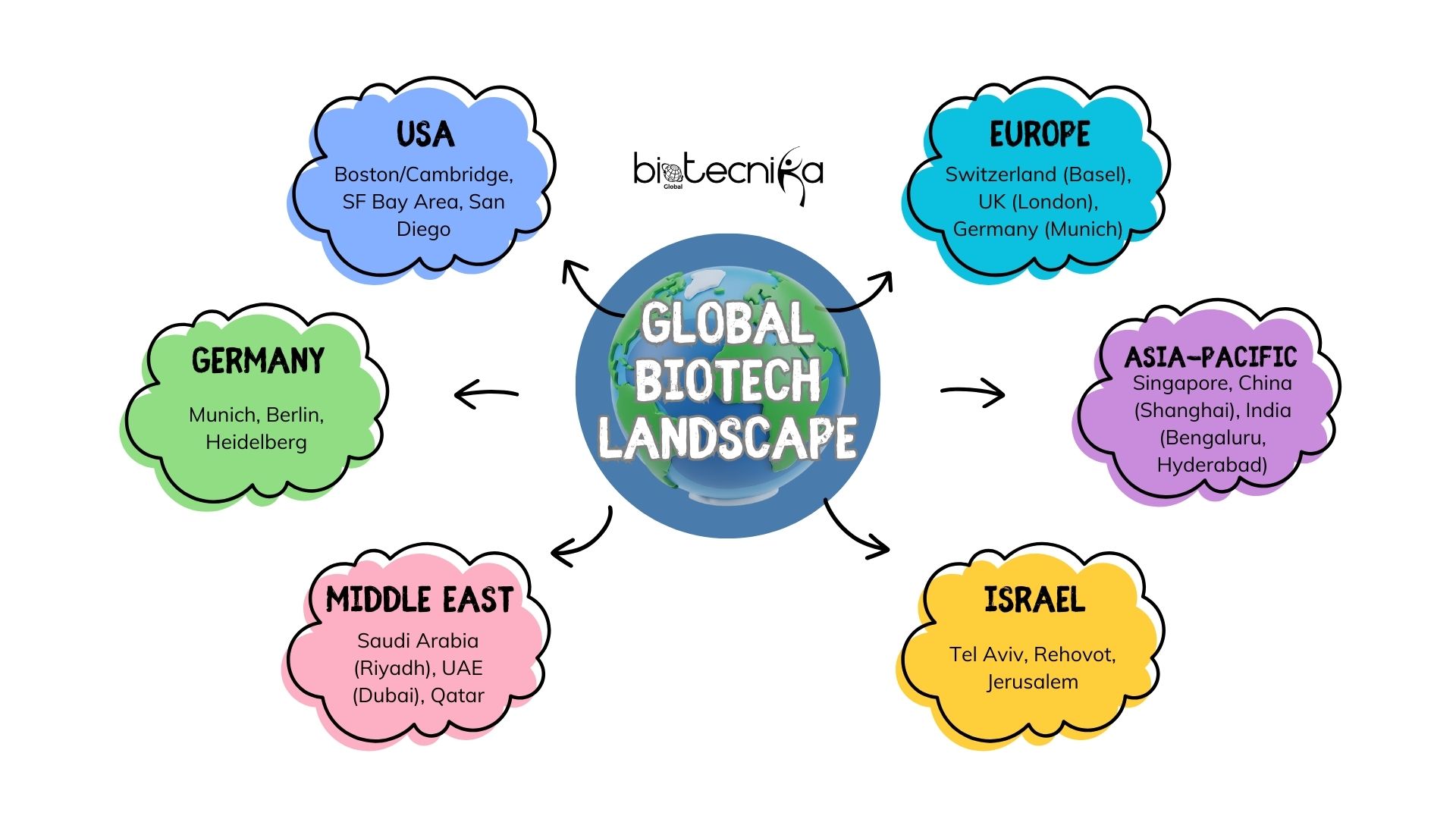
Global Hotspots: Where Should You Move?
Global Biotechnology is not evenly distributed. To fast-track your career, you need to be where the action is.
United States of America (The Heavyweight)
- Hubs: Boston/Cambridge, San Francisco Bay Area, San Diego.
- Vibe: High risk, high reward. Startups are everywhere.
- Best for: R&D, Venture Capital, Executive roles.
Europe (The Pharma Giant)
- Hubs: Switzerland (Basel), UK (London/Cambridge), Germany (Munich).
- Vibe: Stable, manufacturing-focused, strong on big pharma.
- Best for: Manufacturing, Quality Assurance, Regulatory Affairs.
Asia-Pacific (The Growth Engine)
- Hubs: Singapore, China (Shanghai), India (Bengaluru/Hyderabad).
- Vibe: Fast-paced, massive government investment, focus on generics and contract research.
- Best for: Bioprocess Engineering, Bioinformatics, Clinical Trials.
Germany (The Innovation Engine)
- Hubs: Munich (Martinsried), Berlin, Heidelberg.
- Vibe: Precision-obsessed and academically rigorous. Germany is the heart of European biotech manufacturing and “Red Biotechnology” (medical). It blends a centuries-old pharmaceutical heritage with modern mRNA technology.
- Best for: Immunotherapy, Medical Device Engineering, and mRNA Therapeutics.
Middle East (The Visionary Newcomer)
- Hubs: Saudi Arabia (Riyadh/NEOM), UAE (Dubai Science Park), Qatar (Doha).
- Vibe: Massive scale and rapid transformation. Governments are pouring billions into “Vision” projects to diversify beyond oil. They are building entire biotech cities from scratch, with a heavy focus on genomics to address regional health issues (such as diabetes) and food security (desert agriculture).
- Best for: Genomic Sequencing (Saudi Genome Program), Agricultural Biotech (Food Security), Health Tech Digitization.
Israel (The Startup Nation)
- Hubs: Tel Aviv, Rehovot, Jerusalem.
- Vibe: Intense, fast, and agile. Israel has one of the highest per capita startup densities in the world. The sector is heavily integrated with the tech industry, making it a global leader in AI-driven drug discovery and computational biology.
- Best for: AI in Healthcare, Computational Biology, Agritech (Water/Crop efficiency).
The Future of Biotechnology: 2030 and Beyond
- AI-First Biology
The Shift: We are moving from “discovery” to “design.” Historically, finding a drug was like searching for a needle in a haystack. We will use Generative AI to design the needle from scratch by 2030. AI models (like AlphaFold today, but vastly more powerful) will simulate billions of protein structures to predict precisely which molecule will cure a disease. This is reducing drug development timelines from 10 years to 2.
The “Survival” Skill: You don’t need to be a coder, but you must be “data literate.” You need to understand how to ask an AI model the right questions (prompt engineering for biology) and interpret the results.
New Career Paths:
- In-Silico Medicine Designer: A scientist who tests drugs in a virtual simulation before they ever touch a petri dish.
- Genomic Data Detective: Someone who uses AI to scan millions of patient genomes to find the root cause of rare diseases.
2. Decentralized Clinical Trials (DCTs)
The Shift: The hospital is coming to your home. Currently, 80% of clinical trials fail to meet enrollment deadlines because patients can’t afford to take time off work to travel to a clinic. By 2030, trials will be “site-less.” Patients will receive a “Trial-in-a-Box” kit at their doorstep, containing wearable sensors, smart pill bottles, and a tablet for telehealth check-ins.
Why this matters: This democratizes medicine. It allows people from rural areas and diverse genetic backgrounds to participate, ensuring drugs work for everyone, not just people who live near big cities.
New Career Paths:
- Remote Trial Coordinator: Manages the logistics of shipping kits and monitoring patient data streams from thousands of miles away.
- Medical Sensor Technician: Specializes in calibrating and troubleshooting the wearable devices used in these trials.
3. Bio-Security & Cyber-Biosecurity
The Shift: Biology is now a national security issue. As gene-editing tools (like CRISPR) become cheaper and easier to use (you can already buy a kit online), the risk of “bad actors” creating harmful bacteria or viruses increases. But the bigger threat is digital. Hackers targeting a biotech company could alter the formula of a vaccine or steal the genetic data of millions of people.
The “Massive Industry”: Just as cybersecurity became huge in the 2000s, Cyber-Biosecurity will be one of the hottest sectors in 2030. Companies will pay a premium for experts who can lock down both their physical labs and their digital DNA databases.
New Career Paths:
- Bio-Risk Analyst: Monitors global data for signs of new pathogens or unauthorized gene-editing activity.
- Digital Biosecurity Officer: An IT expert specialized in protecting biological data and manufacturing systems from cyber-attacks.
4. Food Security: The Cellular Agriculture Revolution
The Shift: Farms without fields. By 2030, “lab-grown” meat won’t just be a luxury item; it will be a competitor in the supermarket aisle. We are developing “hybrid” products. Think of a burger that is 50% plant-based protein and 50% cultivated beef fat to get the authentic flavor at a lower price. This is critical because we simply do not have enough land or water to feed 10 billion people using cows.
The Job Boom: This industry needs more than just biologists. It requires engineers to build the massive steel tanks (bioreactors) and food scientists to perfect the texture.
New Career Paths:
- Meat Tissue Engineer: The “chef” of the future who designs the texture and marbling of a cultivated steak.
- Cellular Agriculture Farmer: Manages the “brewery” where meat is grown, monitoring cell health and nutrient flows.
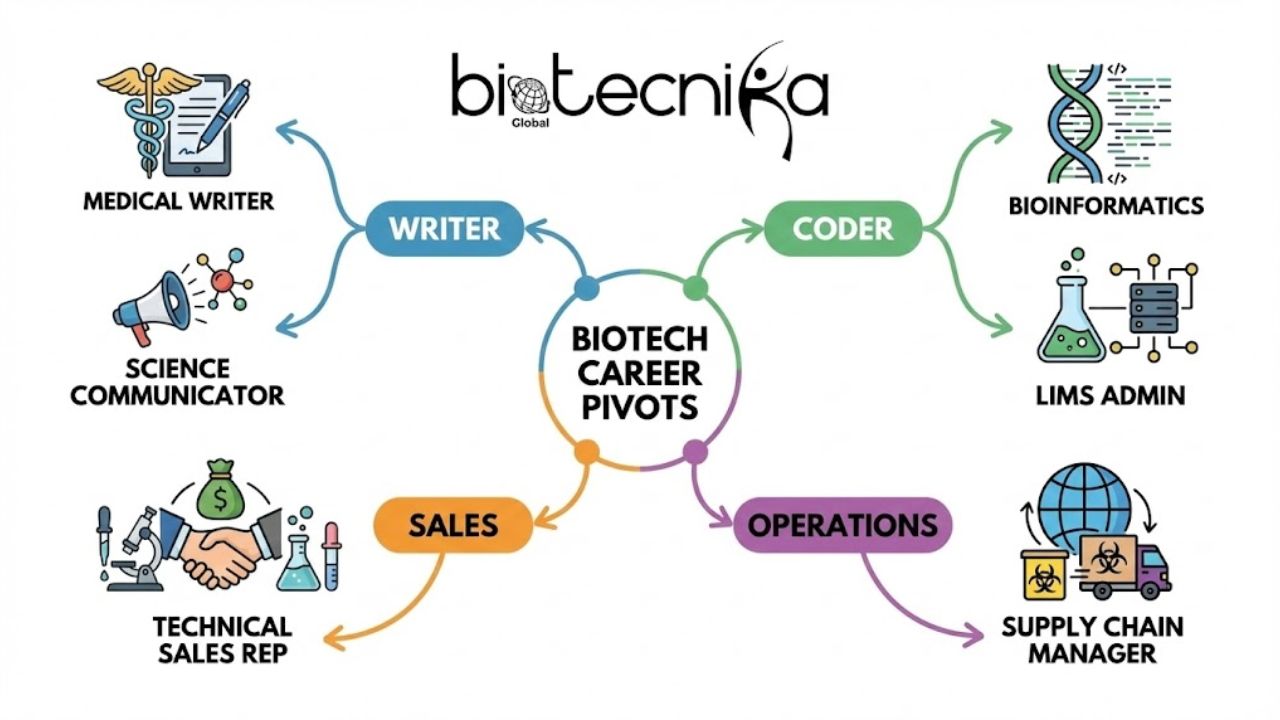
How to Break into Biotechnology Careers, even if you are not a Biologist?
You might be thinking, “I don’t have a PhD in Genetics. Is this for me?” Yes.
The Biotechnology careers ecosystem is desperate for diverse skills.
- If you are a writer, become a Medical Writer or Science Communicator.
- If you are a coder, pivot to Bioinformatics or LIMS (Lab Information Management Systems) administration.
- If you are in sales, technical sales representatives make high commissions selling lab equipment to scientists.
- If you are in operations, supply chain managers are needed to move sensitive biological materials across the globe.
Action Plan for 2026
- Step 1: Network. Join LinkedIn groups for “Biotech Networks” in your region.
- Step 2: Upskill. You don’t always need a new degree. Look for certifications in “GMP compliance,” “Clinical Data Management,” or “Python for Biology.”
- Step 3: Follow the Money. Read newsletters from Biotecnika Global. See which companies just got funding—they are the ones hiring.
We are standing at the foot of a mountain. The Future of Biotechnology is not just about extending human life; it is about sustaining all life on Earth. Whether you are holding a pipette, writing code, or managing a team, you are contributing to one of the most important industries of the 21st century.
Doors are open. Labs are running. And the world is waiting for you!