


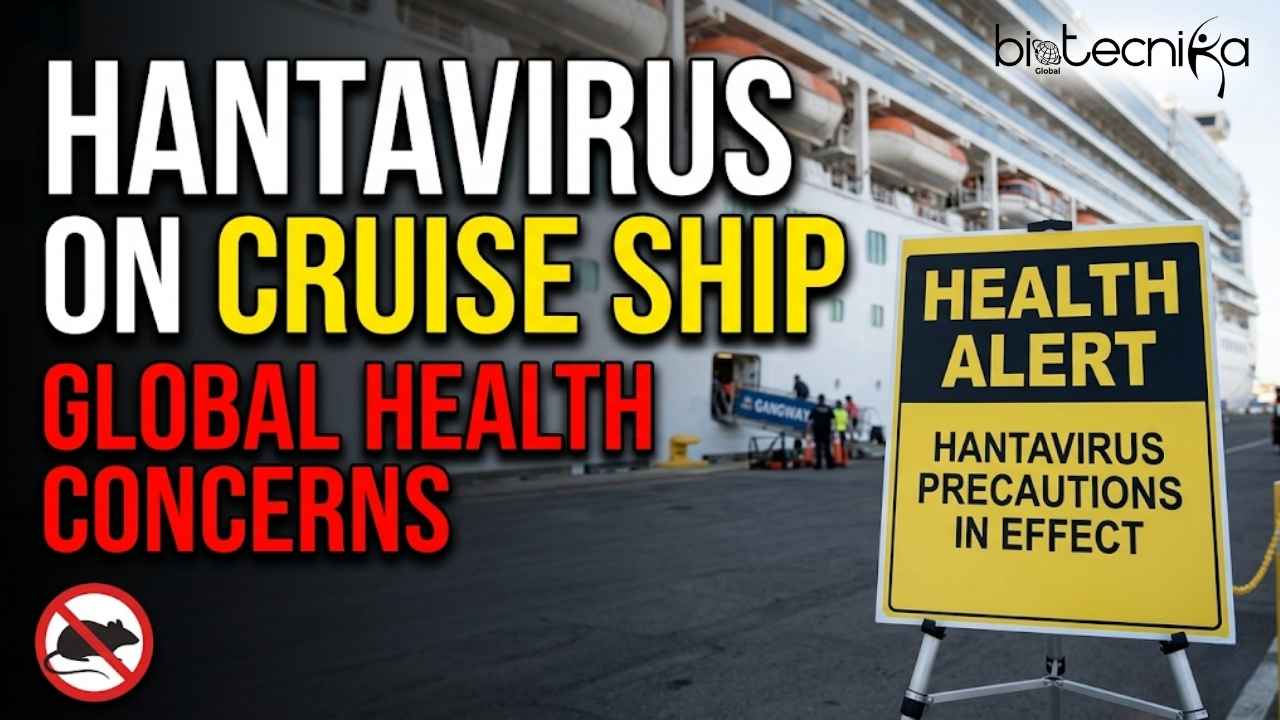
WHO Says More Hantavirus Cases May Appear, But Large Outbreak Is Unlikely
The World Health Organisation on Thursday said that more cases of hantavirus infections could emerge after the disease killed three passengers of a cruise ship.
It is being said that the outbreak has been connected to the expedition cruise ship MV Hondius, where several passengers and crew members were infected during a voyage near South Africa and Antarctica.
According to the reports, there are few confirmed cases that have already been detected, and healthcare authorities are now tracing passengers who traveled on the ship before the outbreak was officially identified.
WHO epidemic and pandemic preparedness and prevention director, Maria Van Kerkhove assured that, “This is not the start of an epidemic. This is not the start of a pandemic”. She also added “This is not Covid”.
Hantavirus is a zoonotic disease, which means it is communicable from animals to humans. It is also carried by rodents that can cause a range of severe illnesses among humans, and possibly death. People can usually get infected by Hantavirus through contact with infected rodents or their droppings or saliva.
Abdirahman Sheikh Mahamud, who heads the World Health Organization’s emergency alert and response operations, said that the organisation was focussing on “a cluster in a confined space with close contact”.
“We don’t anticipate a large epidemic with the experience our member states have and the actions they have taken,” The Guardian quoted him as saying. “We believe that this will not lead to a subsequent chain of transmission.”
WHO chief Tedros Adhanom Ghebreyesus told reporters on Thursday that five confirmed and three suspected cases had been reported so far. This includes the three deaths.
He said, “Given the incubation period of the Andes virus, which can be up to six weeks, it is possible that more cases may be reported”.
Experts are reminding the public that outbreaks like this are not uncommon in modern public health. Many viruses appear in limited clusters and are successfully controlled through contact tracing, testing, and isolation measures.
Health agencies including the WHO, the European Centre for Disease Prevention and Control (ECDC), and national governments are continuing investigations. Officials are also trying to understand exactly how the infections spread among passengers on the cruise ship.
For now, experts say there is no evidence that the outbreak is turning into a major international health emergency. Still, authorities are staying alert as they monitor possible new cases. The hantavirus outbreak is another reminder that infectious diseases remain a global challenge. But unlike the early days of COVID-19, health systems today are more prepared, better connected, and responding much faster to unusual outbreaks around the world.